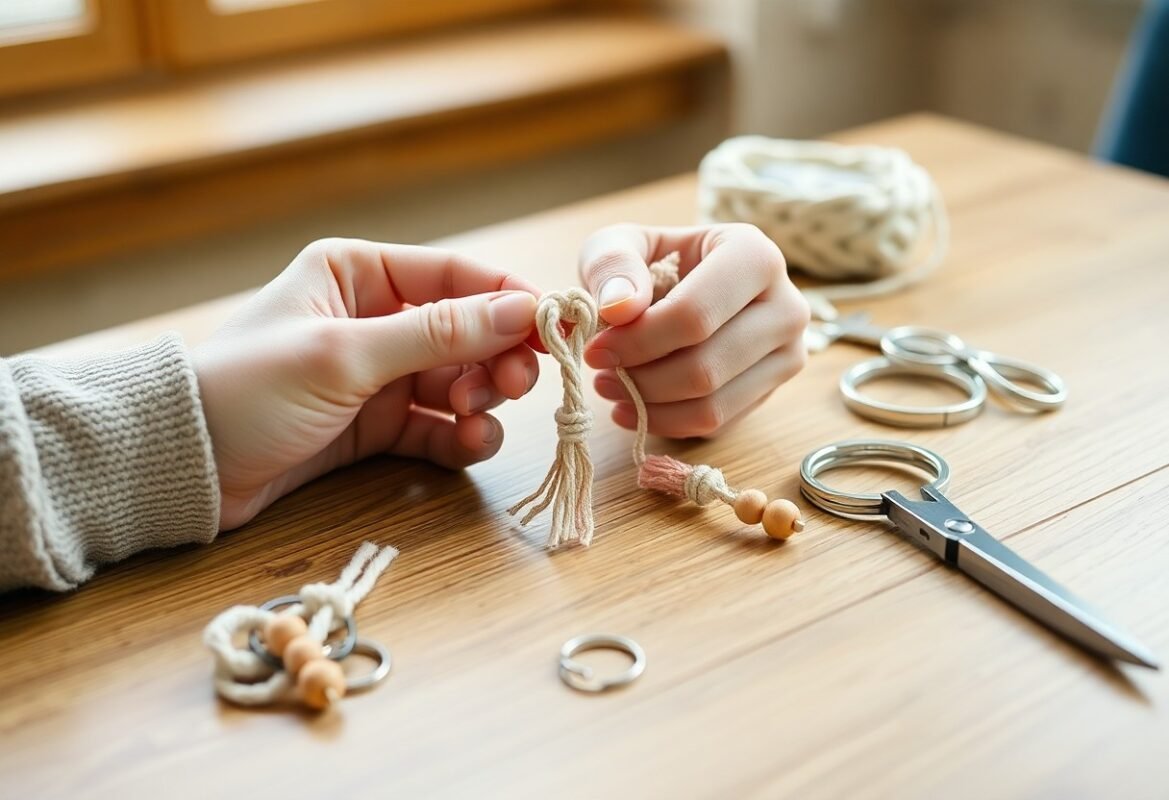


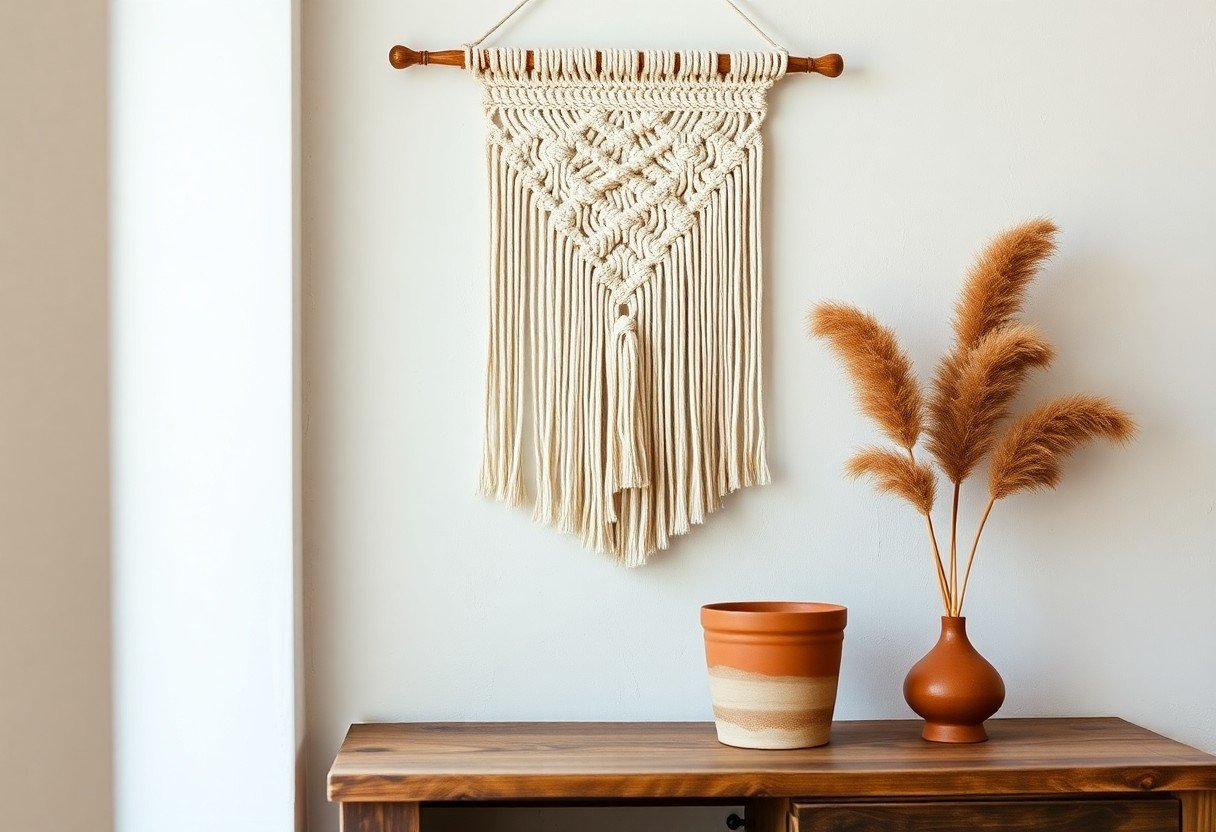
Macrame is a simple and creative way to enhance your home decor. With basic knotting techniques, you can make wall hangings, plant holders, curtain ties, and decorative accents. These pieces add warmth, texture, and character to any space.
This guide explains Macrame in an easy and practical way. You will learn basic knots, how to choose the right materials, and how to finish your projects neatly. By the end, you will feel confident creating Macrame designs that match your room size, lighting, and color scheme.
Key Takeaways:
-
Learn essential knots such as the square knot, half hitch, and lark’s head. These knots form the base of most Macrame projects.
-
Choose quality cords like cotton, jute, or blended fibers for strong and clean results.
-
Match the size of your Macrame piece to your space. Large wall hangings create a focal point, while small plant hangers or coasters work as subtle accents.
-
Mix materials such as wooden beads, driftwood, metal rings, and dyed cords to add contrast and visual interest.
-
Design items that are both decorative and useful, including hanging planters, shelves, and lamp shades.
-
Care for your Macrame by spot-cleaning or gentle hand washing. Reshape the piece while damp and avoid long exposure to direct sunlight.
Understanding Macrame
Macrame is the art of creating decorative items using knots. It does not require needles or machines. Everything is made by hand using cord and simple techniques. This makes Macrame an excellent choice for beginners
History of Macrame
Macrame dates back to the 13th century. Arab weavers used knotted fringes to finish woven fabrics. Later, sailors spread the craft across the world during long sea journeys. They used Macrame to create belts, hammocks, and decorative items.
The craft became popular again during the Victorian era. It returned in the 1970s with bold wall hangings and plant holders. Today, Macrame blends traditional knots with modern styles and materials.
Materials Used in Macrame
Macrame projects use different types of cord. Cotton, jute, and hemp are popular for indoor decor. These fibers are soft and provide a natural look. Nylon and polyester are better for outdoor pieces because they resist moisture and weather.
Cord thickness also matters. Thin cords, around 2–3 mm, work well for delicate designs. Thicker cords, such as 6–8 mm, are ideal for plant hangers and shelves. Choosing the right material improves strength, drape, and appearance.
Basic Macrame Techniques
You can improve your Macrame skills quickly by learning a few basic knots. Start with the square knot, half hitch, and lark’s head. These knots appear in most Macrame projects. Check 17 Amazing Macrame Home Decor DIY Patterns by SilentKnot to study stitch combinations used in finished wall hangings and plant holders.
Try different cord types and thicknesses as you practice. You will notice how texture, weight, and drape change the final look. For design inspiration, study finished wall hangings and plant holders to see how knots work together.
Knots to Know
Learning five core knots will help you complete most Macrame designs:
- Lark’s head
- Square knot
- Half hitch
- Double half hitch
- Clove hitch
Practice each knot at least 15–20 times. This builds speed and consistency. Use square knots for solid sections. Try alternating square knots for texture. Use half hitches to create diagonal lines. Lark’s head knots work best for attaching cords to dowels or rings.
Tools Needed
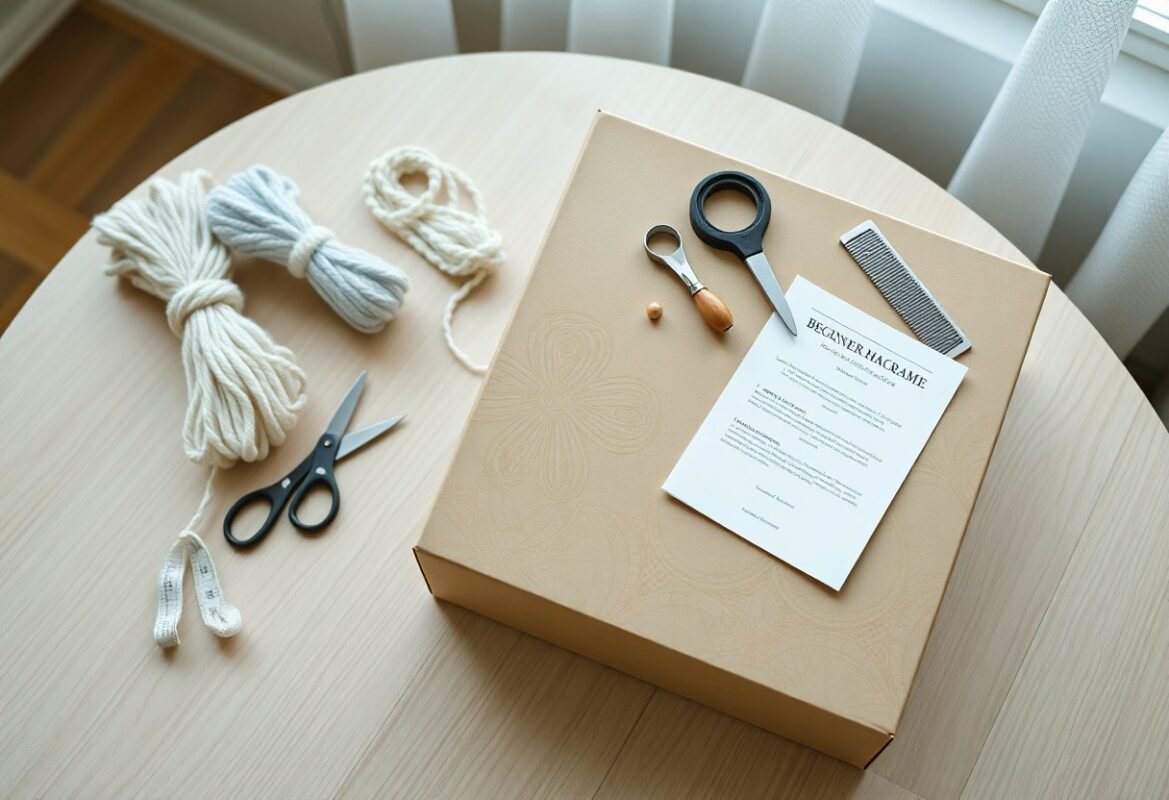
You only need a few tools to get started with Macrame:
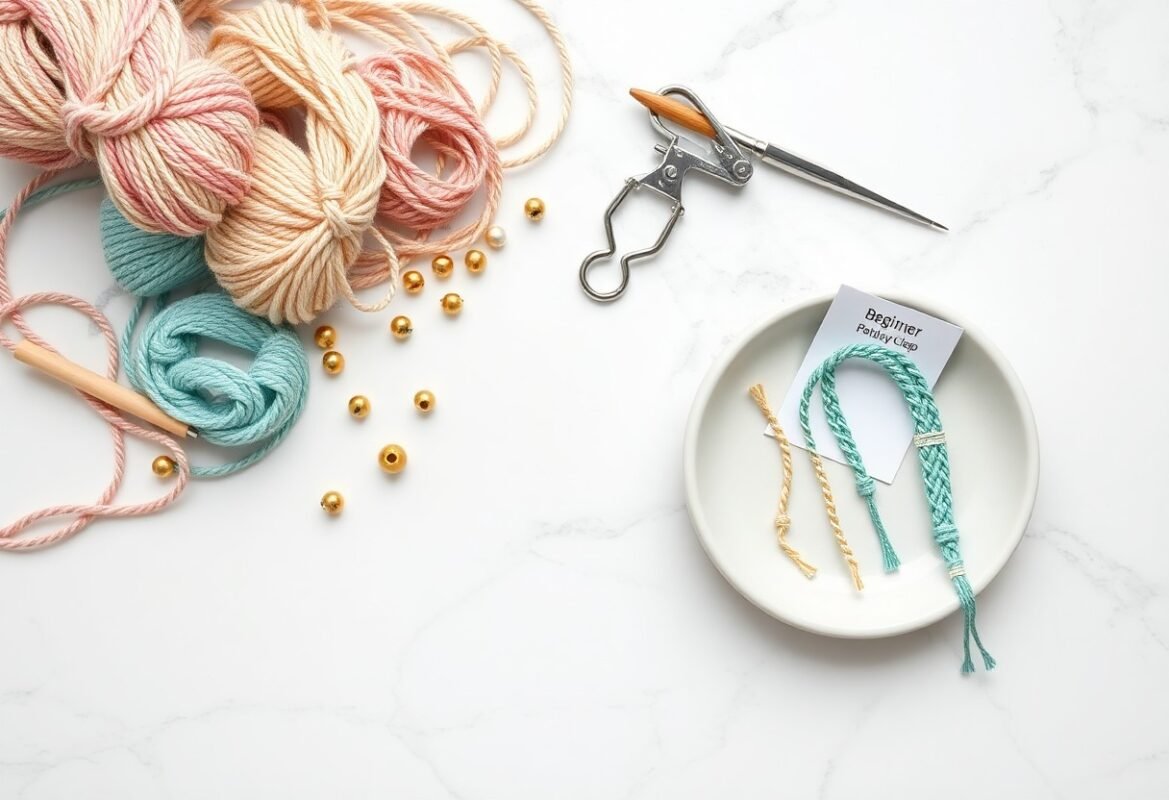
- 3–5 mm cotton cord or jute for a rustic look
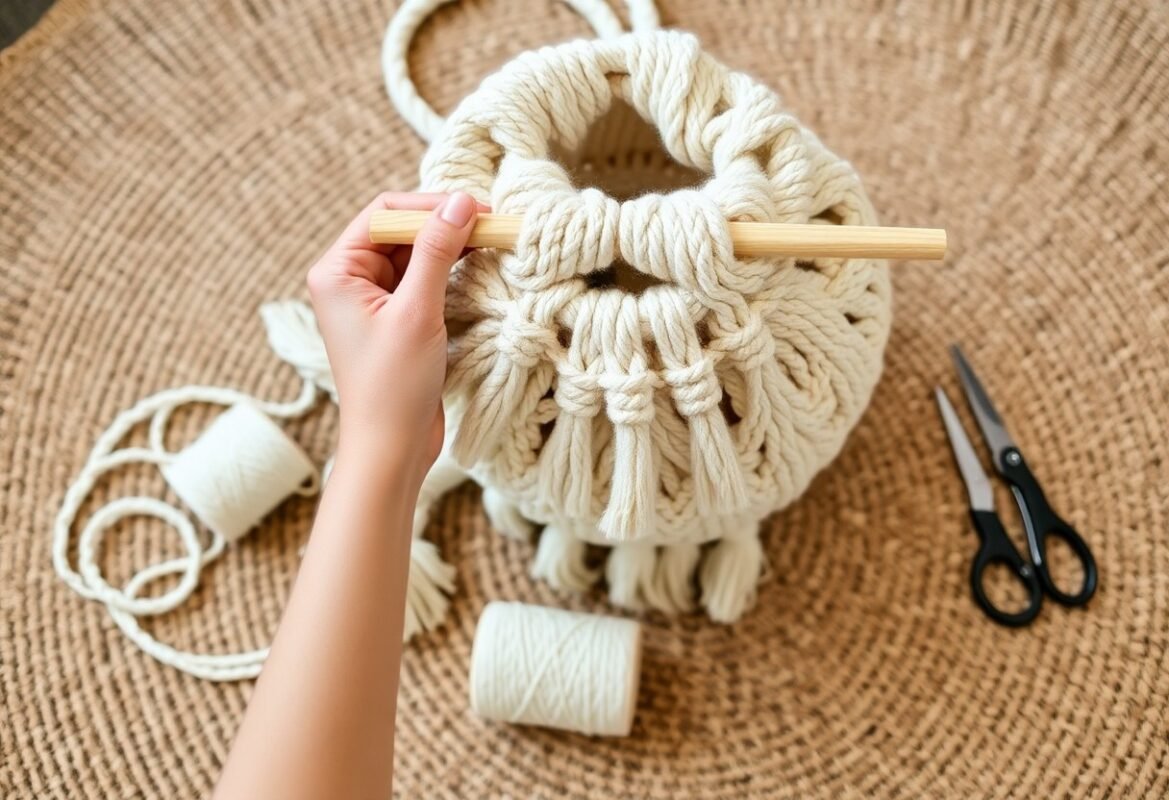
- A wooden dowel (1–2 cm thick) or a wooden ring (10–20 cm wide)
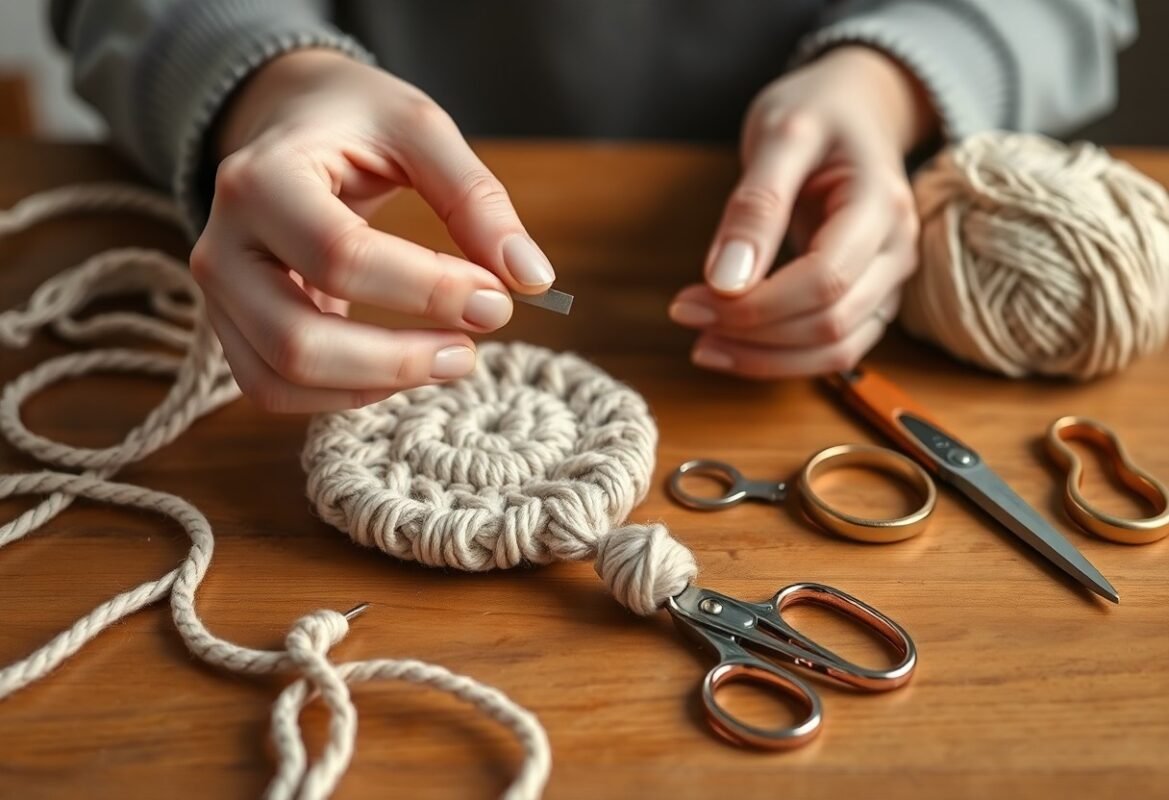
- Sharp scissors
- Measuring tape
- A metal comb for fringe finishing
Keep blunt tapestry needles and stitch markers nearby. They help with repairs and detailed work.
Cord choice matters. Single-ply cord feels softer but loosens faster. Twisted cord holds knots firmly. Use 3 mm cord for small plant hangers. Choose 5–8 mm cord for statement wall pieces. A clipboard or workboard helps maintain tension. Lightly dampen natural fibers when shaping fringe. Stainless-steel scissors give clean, even cuts.
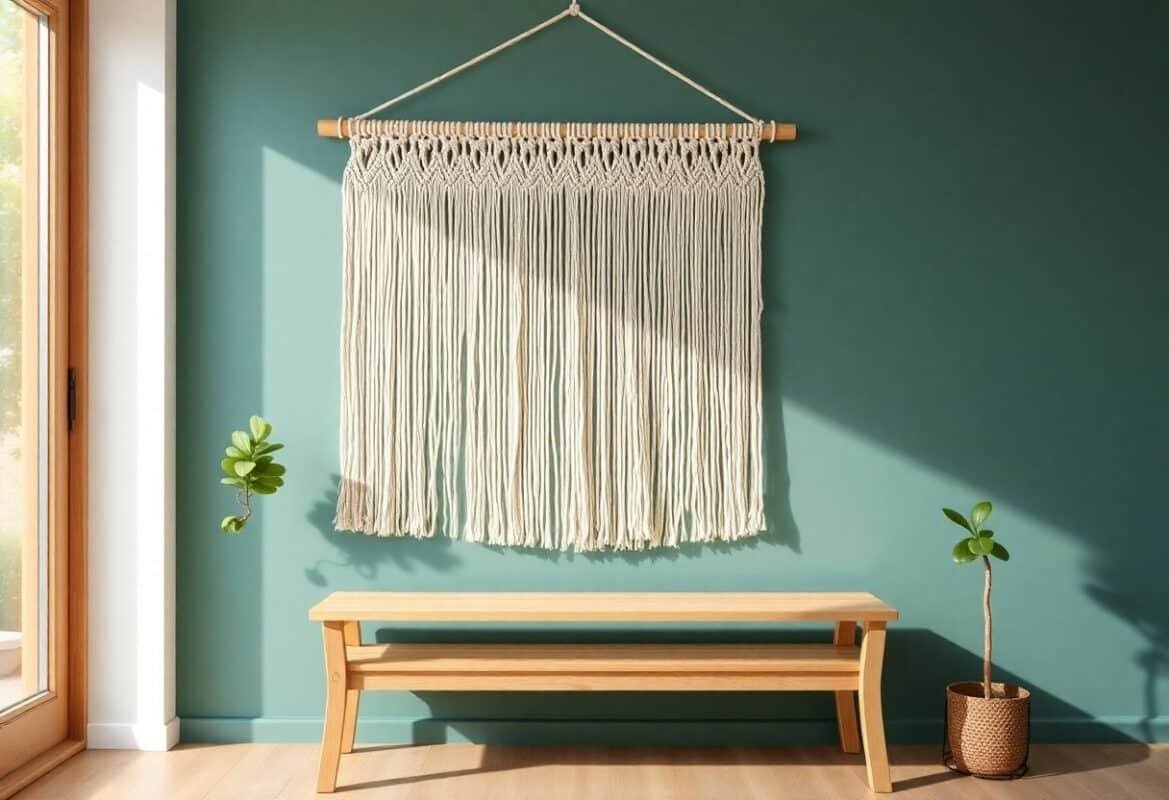
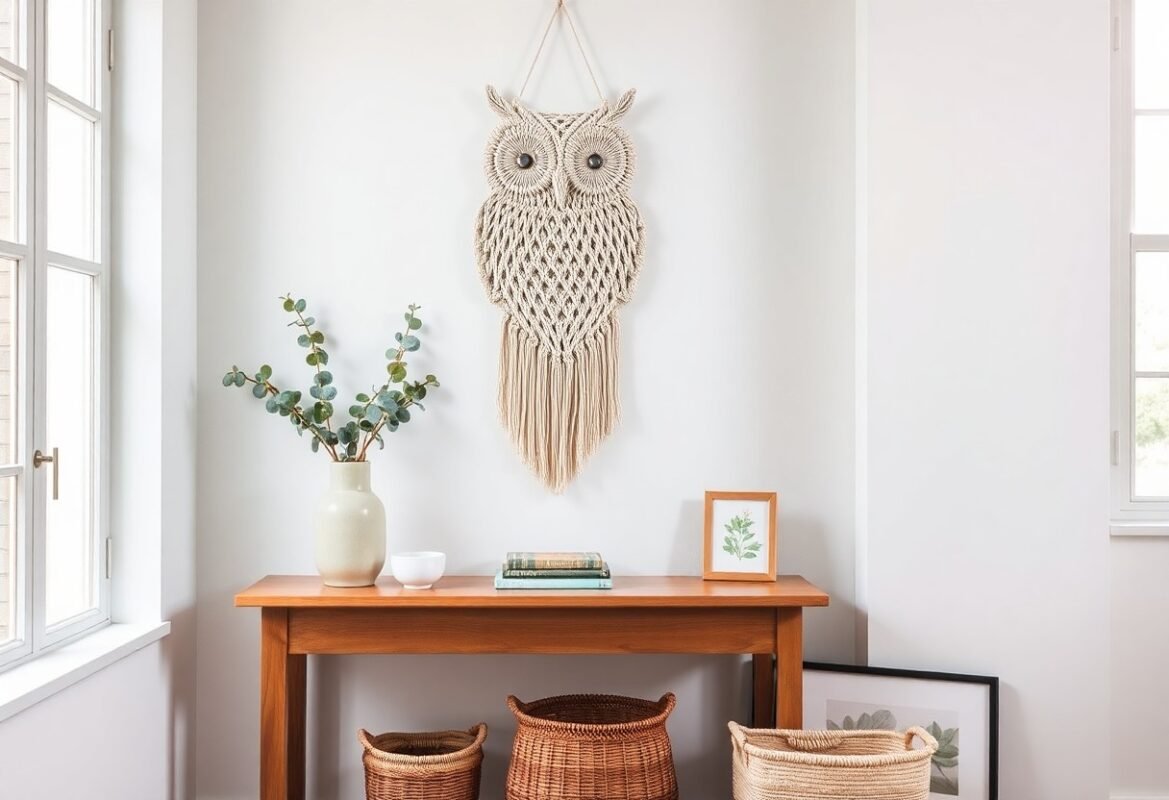
Macrame Wall Hangings
Design Ideas
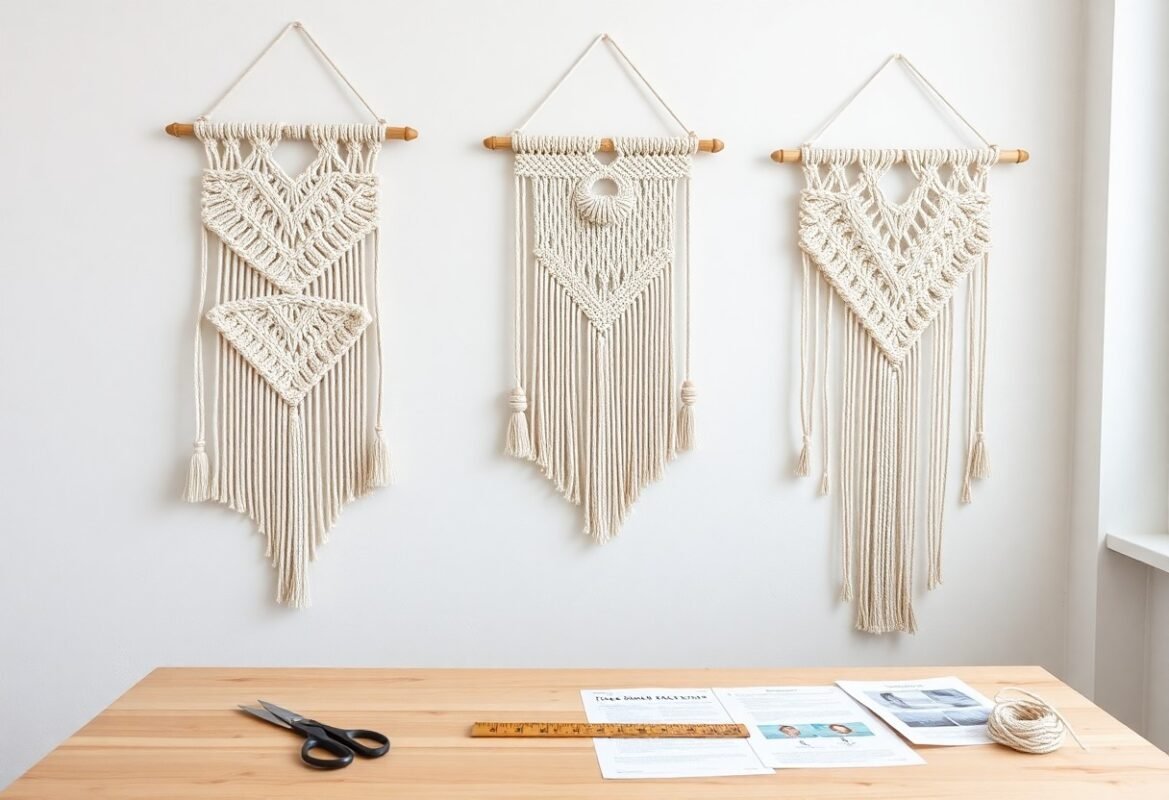
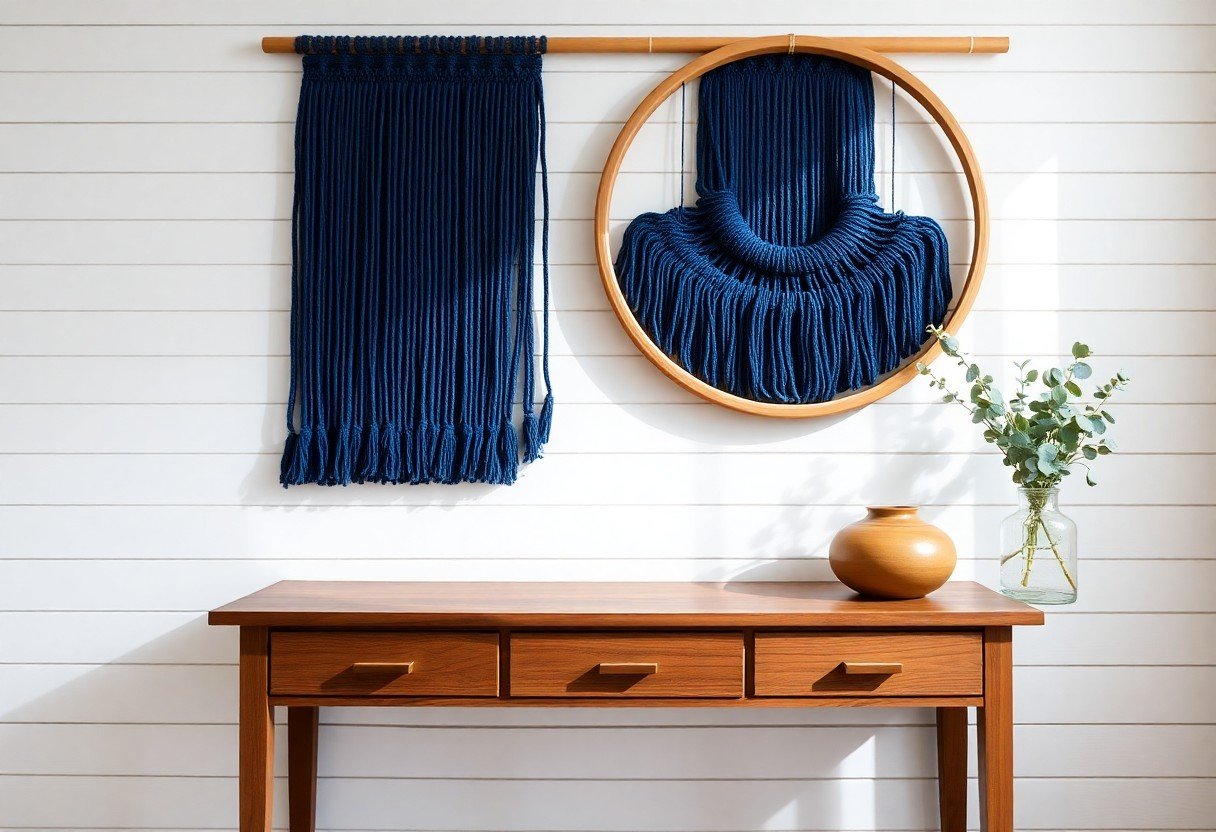
You can combine thin and thick cords in one piece. Use 4 mm cotton for detailed knots. Frame the design with 8 mm chunky cord. Fringe length also changes the look. Short fringe feels modern. Long fringe adds drama.
Try three narrow panels hung close together. Stagger them slightly for movement. Driftwood hangers paired with wooden or metal beads also work well. Adjust knot density to suit the room. Tight knots feel bold. Open spacing keeps the design light.
Tips for Installation
Always choose wall anchors based on weight. Lightweight pieces can use heavy-duty adhesive strips. Medium wall hangings need picture hooks rated 20–50 lb. Heavy pieces require toggle anchors or studs.
Use a level before hanging. Test the strength by pulling gently downward before final placement.
Installation basics:
- Locate wall studs when possible
- Pre-drill pilot holes for wood screws
- Use toggle anchors for drywall
- Choose hooks with a higher weight rating than needed
For wide or heavy pieces, use a French cleat system. It spreads weight across the wall and makes repositioning easy. Always test the hanging with extra pressure for safety.
Macrame Plant Hangers
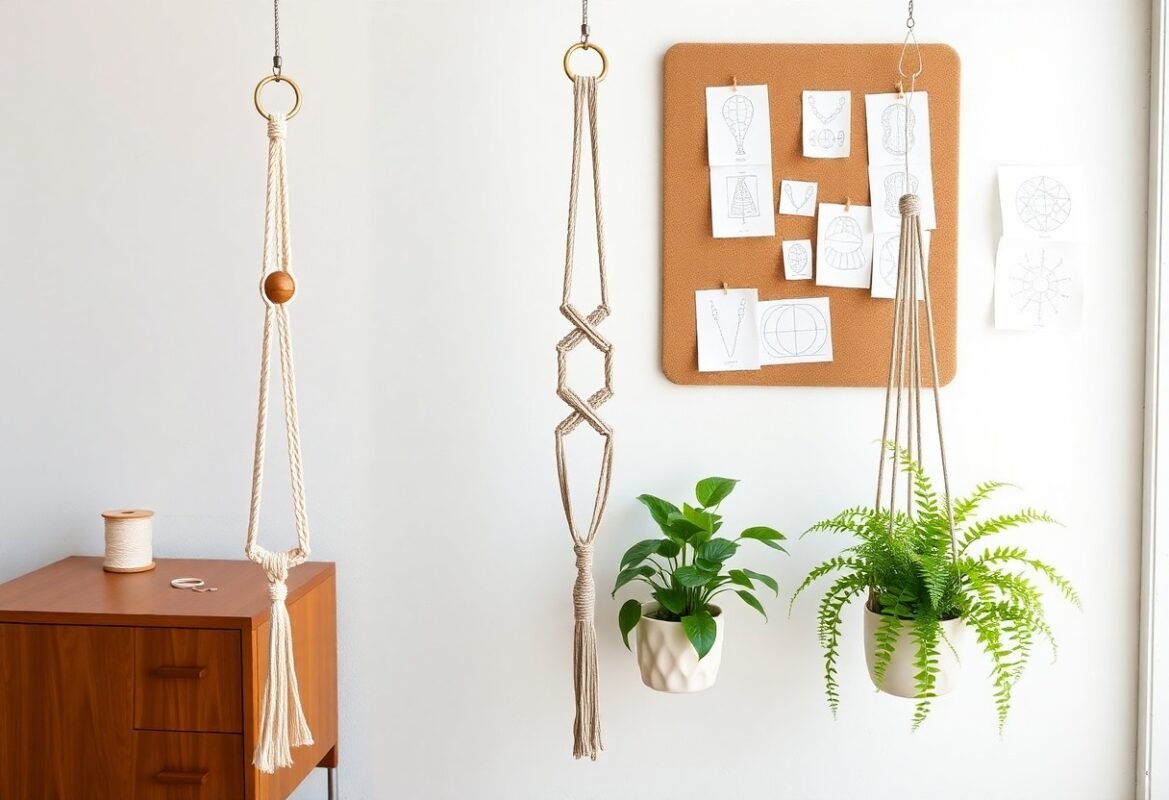
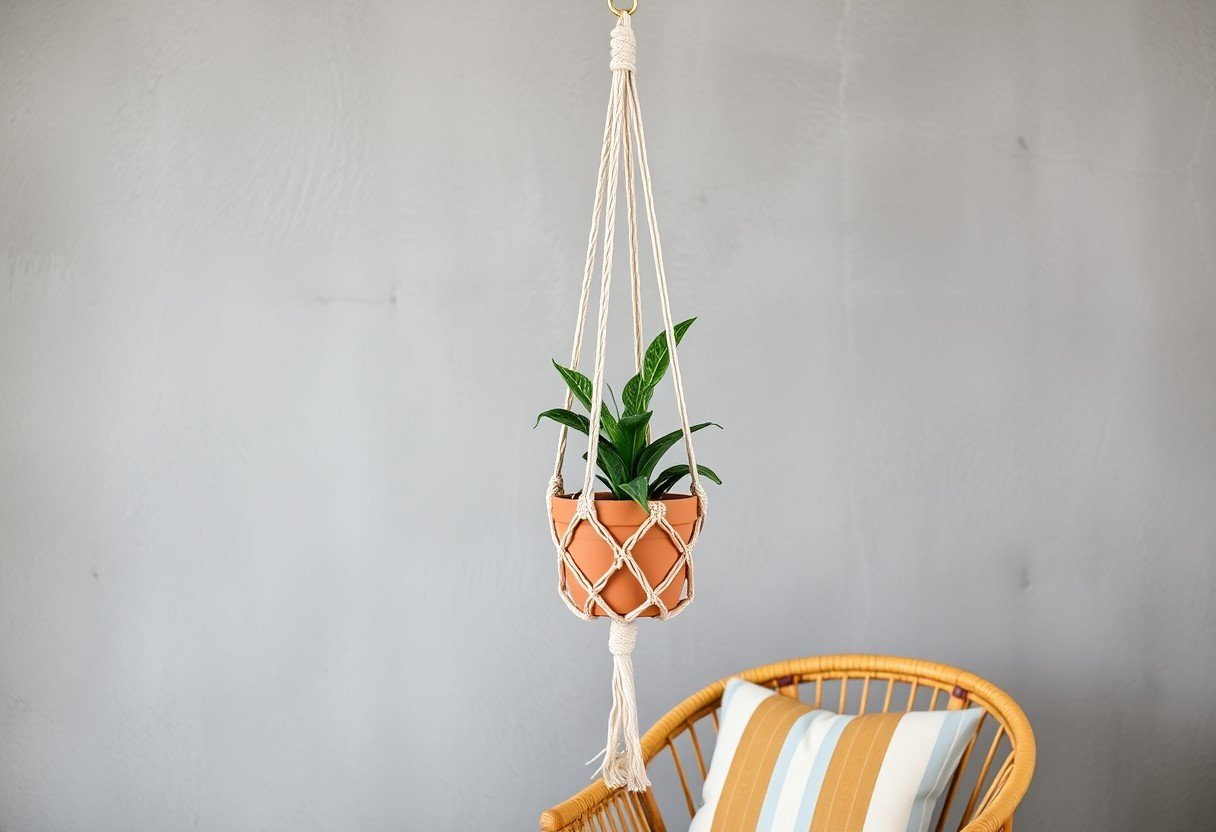
To make plant hangers, start with four cords. Use 3–6 mm cotton for small pots. Choose 6–8 mm cord for heavier ceramic pots. Cord length usually ranges from 3–5 meters.
Use square knots for strength. Spiral knots add visual movement. Always test the hanger with extra weight before hanging it.
Styles and Variations
There are many Macrame hanger styles:
- Classic cradle hangers
- Spiral rope designs
- Netted patterns
- Tiered multi-pot hangers
- Shelf-style holders
Space knots evenly for balance. Add beads, rings, or dyed cords to match boho, coastal, or modern decor styles.
Best Plants for Hangers
Some plants work better in hanging Macrame designs. These include pothos, spider plants, philodendron Brasil, English ivy, and Boston ferns.
Trailing plants look best as they grow downward. Choose lightweight pots to reduce strain on knots and hooks.
Match pot size to plant growth. Start small and size up as roots expand. Water most hanging plants every 7–14 days. Trim vines regularly to keep plants full and healthy.
Macrame Furniture Accents
Macrame can refresh old furniture. Use it on bench fronts, cabinet panels, chair backs, or hanging shelves. Small details like fringe can change the entire look.
Use 3–6 mm cotton for indoor furniture. Choose thicker jute or polyester for outdoor use. Even a simple woven panel can turn a thrifted piece into a focal point.
Incorporating Macrame into Furniture
Attach Macrame using wooden dowels, upholstery tacks, or metal rings. Cabinet panels can be woven to size and screwed into place. Chair backs often need 12–24 cords.
Adjust knot spacing for comfort and airflow. Natural fibers work well with wood. Synthetic rope is better for outdoor or high-traffic furniture.
DIY Macrame Chair Ideas
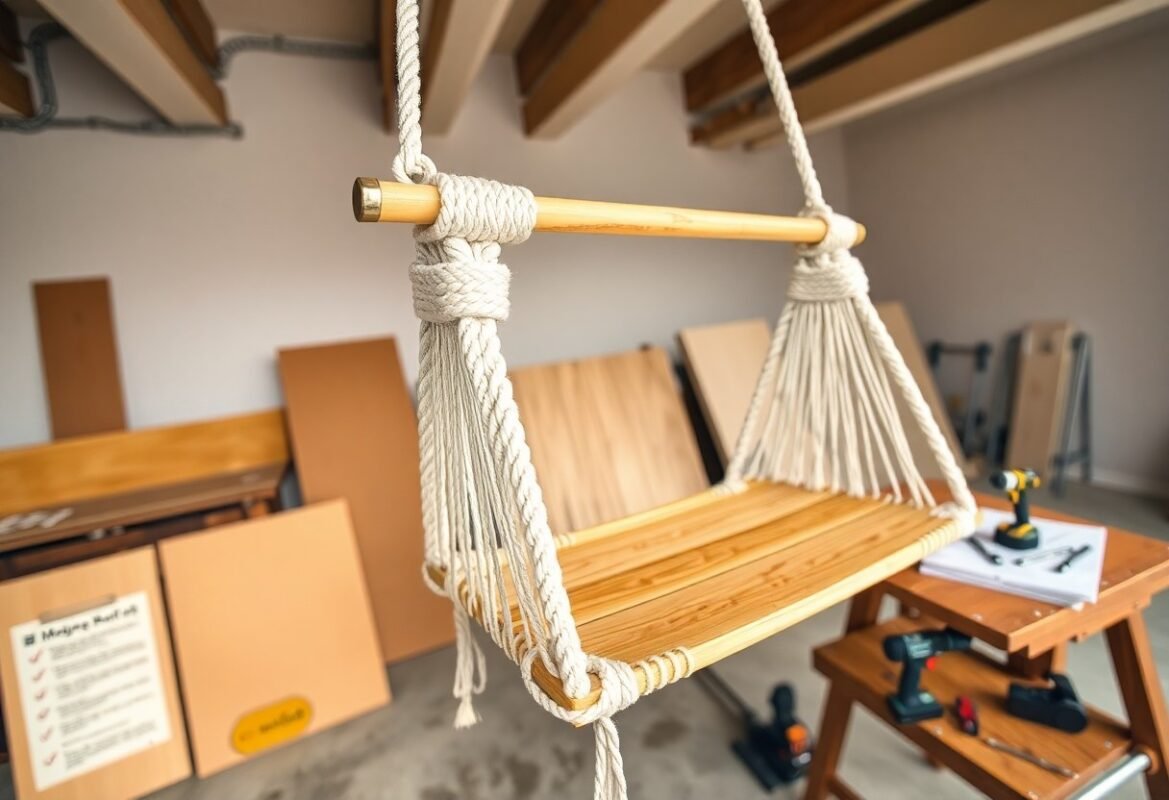
You can reweave a chair seat using 3–4 mm cotton cord. This creates a breathable and comfortable surface. Hanging chairs require thicker rope and rated hardware for safety.
Always start with a strong frame. Measure carefully before cutting cord. Secure cords firmly underneath the seat. Build patterns row by row.
For hanging chairs, use rope rated for heavy loads. Install eye bolts, hooks, and carabiners securely. Test weight slowly. Finish edges with locking knots and apply fabric-safe sealant for durability.
Macrame Accessories for Home
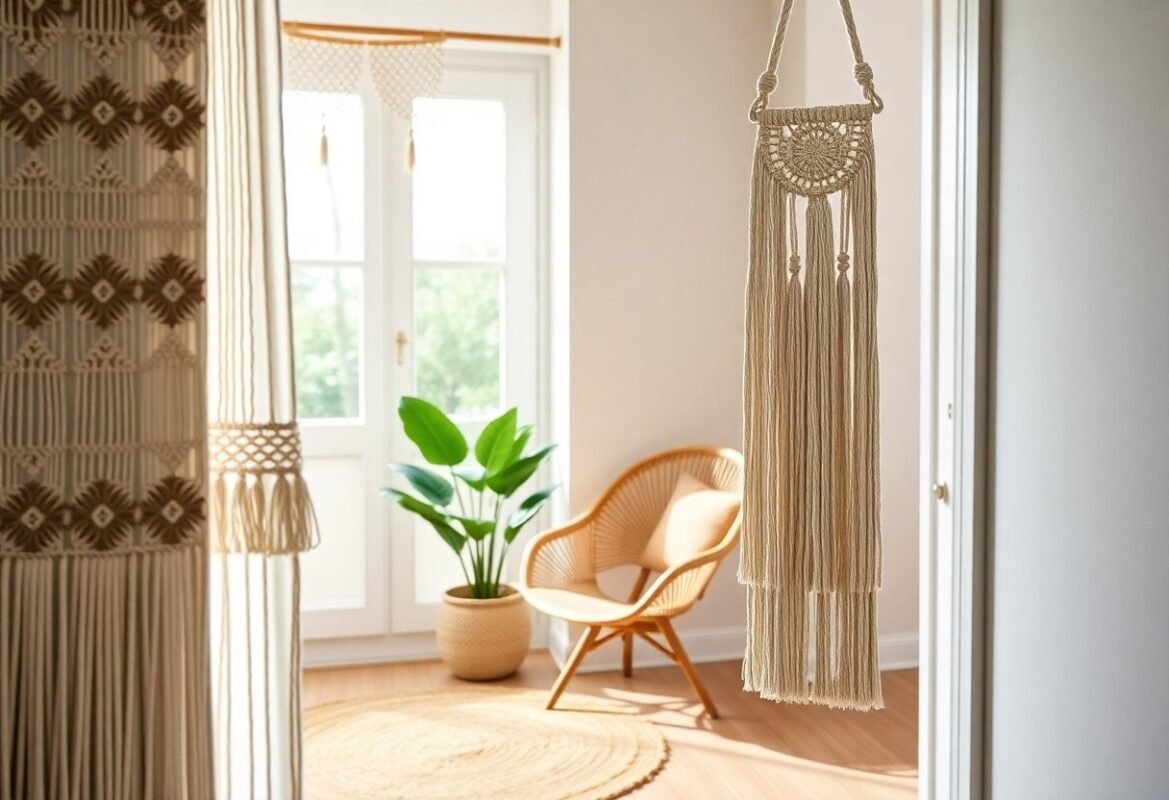
Small Macrame accessories add layered texture to home decor. These include plant hangers, coasters, curtain tiebacks, and shelf accents. Mix cotton cord with beads or leather for contrast.
Long plant hangers suit tall spaces. Shelf fronts help define small corners and nooks.
Consult 10 Stunning Ways to Incorporate Macrame into Your Home for styling ideas.
Key Holders and Wall Decor
Macrame key holders are both decorative and practical. Use a wooden dowel with 4–6 knotted loops. Add a small shelf for mail or sunglasses. Most designs take under an hour to complete. Use 3–4 mm cord for durability. Beads or brass rings add a finished look.
Unique Lighting Fixtures
Macrame pendant lights add warmth and texture. Knot cord around metal hoops sized 12–20 inches. Always use LED bulbs to reduce heat. Leave space between the bulb and cord. Open knot patterns allow airflow and create soft shadows.
Use cotton cord and a standard socket with low-watt LED bulbs. Add a diffuser if needed. Adjust fringe length to control light spread. These fixtures work well in dining areas or reading corners.
Summing up
Creative Macrame allows you to personalize your home decor. You can adjust texture, scale, and color for each space. Choose the right cord and knots for function and style. Mix wall hangings, plant holders, furniture accents, and lighting for a layered look. With practice, your Macrame pieces will feel both artistic and practical.
FAQ
Q: What materials and tools do I need to start creative macrame art for home decor?
A: You need Macrame cord (3–8 mm), wooden dowels or driftwood, metal rings, beads, scissors, and measuring tape. A clamp or workboard helps with tension. Use synthetic cord outdoors and natural fibers indoors.
Q: What are beginner-friendly macrame projects that still look stylish?
A: Start with simple wall hangings, plant hangers, keychains, coasters, and curtain tiebacks. Use basic knots and repeat patterns. Practice on small samples first.
Q: How can I use color and texture to make macrame pieces fit different home decor styles?
A: Natural tones suit boho and Scandinavian styles. Bold colors work for modern decor. Mix thick and thin cords, beads, leather, or metallic accents for contrast.
Q: What macrame ideas work best in specific rooms like living rooms, bedrooms, bathrooms, and entryways?
A: Living rooms suit large wall hangings. Bedrooms work well with headboards or pendant lights. Bathrooms need treated or synthetic cord. Entryways benefit from key holders and coat racks.
Q: How can I combine macrame with other materials such as wood, metal, plants, or ceramics for a modern look?
A: Anchor macrame on reclaimed wood planks or painted panels, weave cords through metal hoops or geometric frames, and suspend ceramic or glass planters with macrame cradles. Integrate LED fairy lights into open weaves, glue bead or shell accents onto knots, and use mixed-media backings (fabric, canvas, resin) to create dimensional wall art. Contrast soft cord with hard metals or polished wood for a contemporary edge.
Q: How do I determine the right size and placement for macrame wall hangings and plant hangers?
A: Match wall hangings to furniture size. Hang pieces at eye level. For plant hangers, allow extra cord length and use strong ceiling anchors.
Q: How should I care for macrame pieces to prevent fraying, fading, and deformation?
A: Dust regularly. Spot-clean with mild soap. Hand-wash when needed and reshape while drying. Avoid direct sunlight to prevent fading.