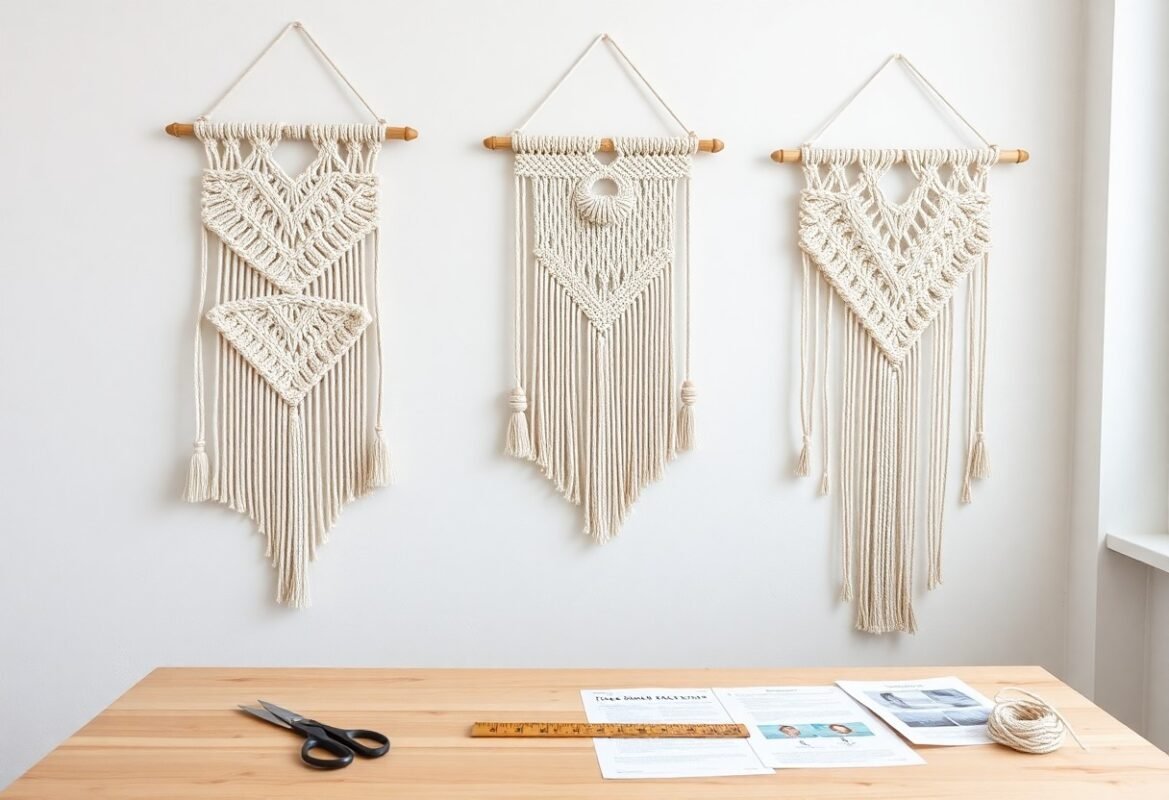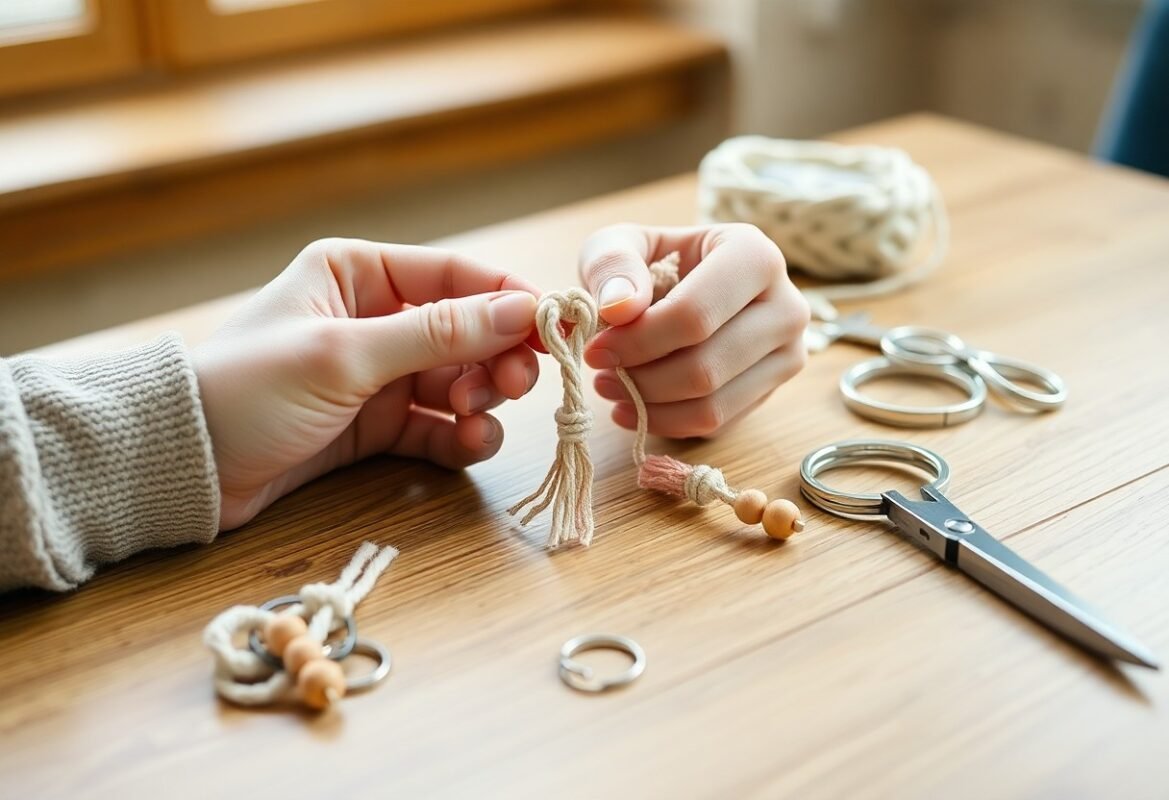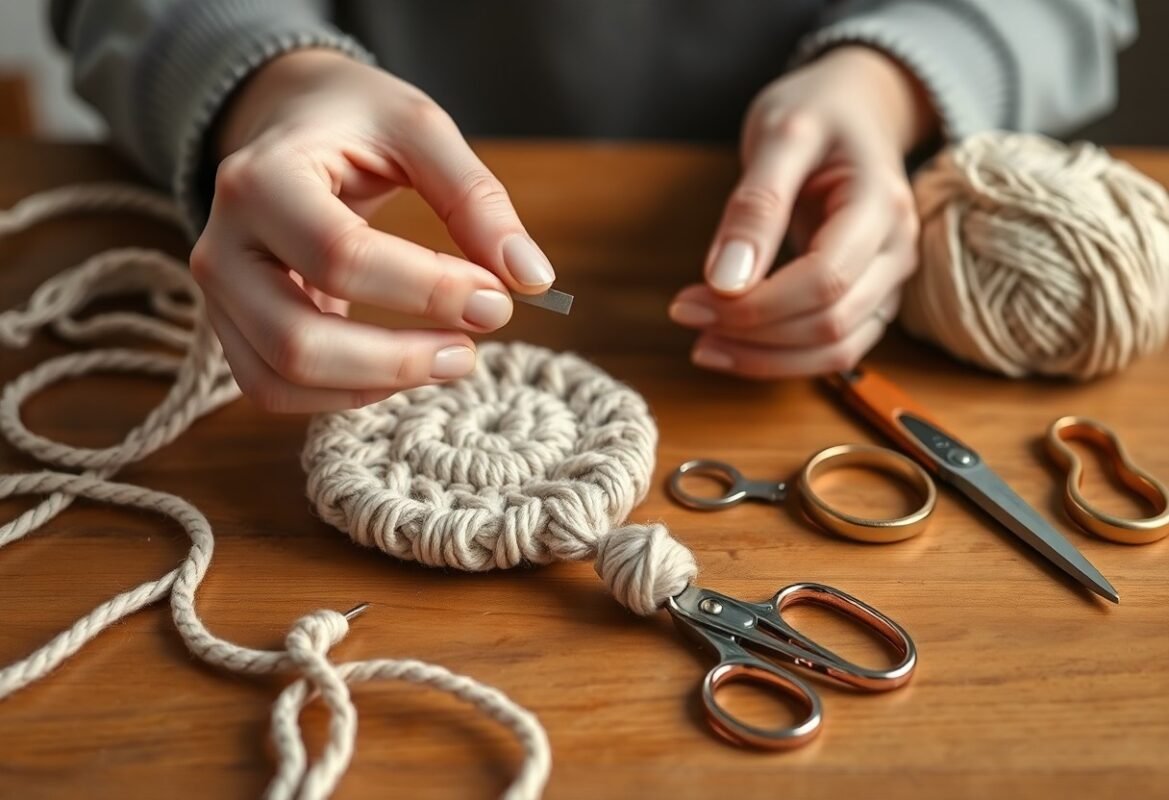


It’s easy to elevate your living space with handcrafted macrame coasters that blend practicality and aesthetic appeal; this post guides you through simple knots, material selection, and finishing touches so you can make durable, stylish coasters tailored to your decor. You’ll learn time-saving techniques and creative variations to personalize each piece for gifts or everyday use.
Key Takeaways:
- Choose appropriate materials: cotton cord, jute, or recycled fibers for absorbency, texture, and durability.
- Master basic knots: square knot, spiral knot, and lark’s head create most coaster patterns quickly.
- Customize size, color, and pattern to match room decor or create a coordinated set.
- Finish edges and seal ends with fabric glue, stitching, or lighter melting (for synthetic cord) to prevent fraying.
- Combine macrame coasters with other textures-ceramic, wood, or woven trays-to elevate table styling.
Materials Needed
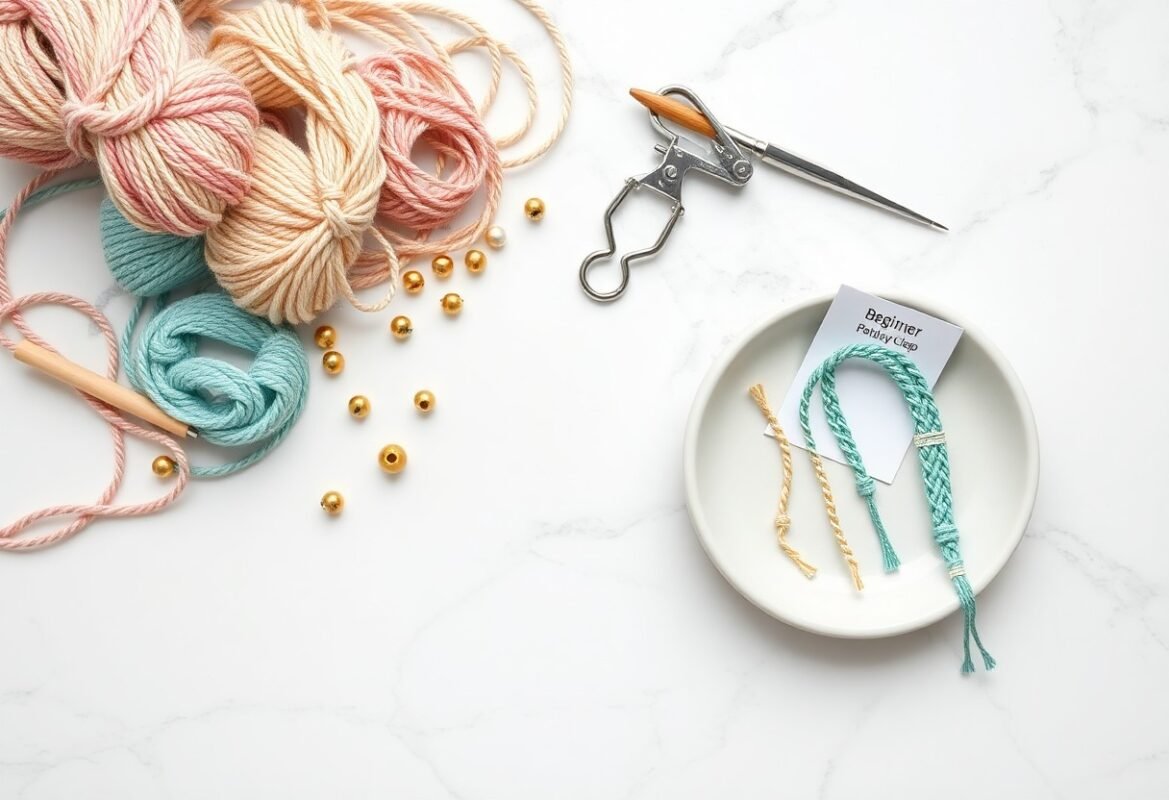
Collect a focused palette of materials so you can match function and style: 3-5 mm cotton cord for absorbency and crisp knots, 4-6 mm jute or hemp for rustic texture, 2-4 mm recycled polyester or nylon for colorfastness and outdoor use, plus a handful of wooden beads or rings for accents. Buy 10-20 m of cord per simple coaster pattern and add 5-10 m extra when experimenting with thicker diameters or layered designs.
Types of Rope
Choose rope by fiber and diameter: cotton (3-5 mm) gives soft, washable coasters with clear knot definition; jute (4-6 mm) provides a rustic, textured look but sheds more; hemp (3-5 mm) balances strength and texture; recycled polyester (2-4 mm) is colorfast and low-stretch for outdoor coasters; nylon (2-3 mm) offers high strength and smooth edges for tight patterns.
| Cotton (3-5 mm) | Absorbent, easy knot definition, machine-washable; great for everyday indoor coasters |
| Jute (4-6 mm) | Rustic texture, strong but abrasive; best for decorative, low-wash pieces |
| Hemp (3-5 mm) | Durable and eco-friendly, slightly coarse; ideal for long-lasting natural looks |
| Recycled polyester (2-4 mm) | Colorfast and low-stretch; suitable for outdoor or spill-prone areas |
| Nylon (2-3 mm) | Smooth, very strong, melts cleanly; works well for tight, durable edges |
- Thickness impacts final diameter: thinner cords produce denser, smaller coasters.
- Construction matters: braided cords are smooth, twisted ropes show strand texture.
- Fiber behavior differs: natural fibers soften with washing, synthetics retain shape outdoors.
- The diameter you choose determines final coaster size, weight, and knot visibility.
Tools Required
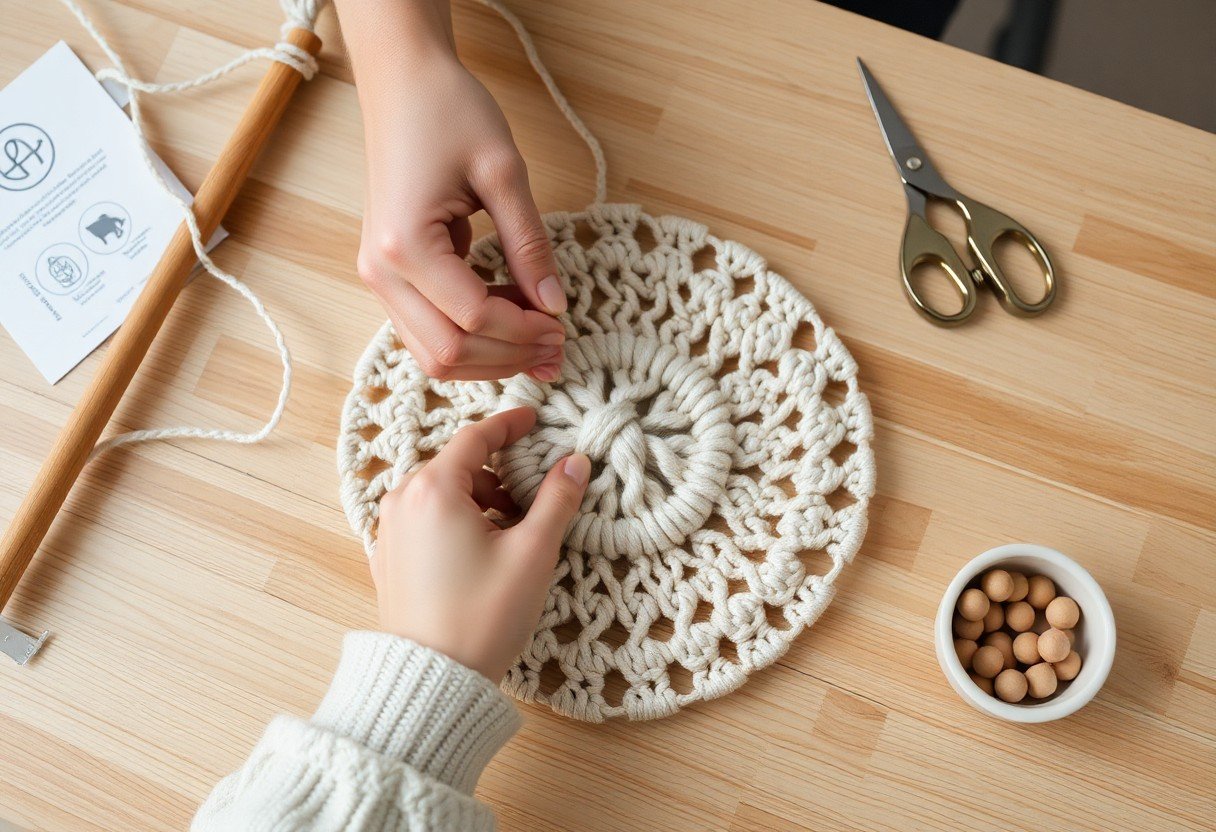
You’ll want an 8-inch pair of sharp scissors for clean cuts, a retractable tape measure or ruler for accurate sizes, masking tape or binder clips to secure working ends, T-pins or a macramé board for tension, and a small comb to finish fringes; a lighter can seal synthetic ends and a drop of clear PVA glue secures final knots.
Sharp scissors prevent ragged ends that complicate finishing; when you use nylon or polyester, carefully melt tips with a lighter to stop fraying but avoid flames on natural fibers. Tape or clips hold starter rounds so you can knot both hands-free, and T-pins on a foam board maintain even tension during circular patterns. A comb opens up fringes for a soft, finished edge, and a small dot of clear glue keeps coasters intact through light machine washing.
Basic Macrame Techniques
Focus on consistent tension, cord length, and working scale: for coasters you’ll often use 3-5 mm cord and start with 8-12 working strands about 60-80 cm long. Practice mounting cords with a lark’s head and alternate rows of square knots and half-hitches to build stable, absorbent texture; for a beginner project with step-by-step guidance see DIY Macrame Coasters: A Quick and Fun Project for Beginners.
Knots Explained
You’ll rely mainly on lark’s head for attachment, the square knot (uses four cords) for flat panels, and the double half hitch for outlining shapes; a spiral (half) knot creates twist texture. Practice each knot in 10-15 repeated reps to internalize tension, then combine: four square-knot rows followed by a round of half-hitches creates a firm, absorbent coaster in about 20-30 minutes.
Patterns to Try
Try a radial sunburst using radial double half-hitches, a checkerboard from alternating square-knot blocks, or concentric rings by switching cord thickness between 3 mm and 5 mm. Start with 8 warp cords for a 9-10 cm coaster, and alternate knot types every 2-3 rows to control stiffness and drainage.
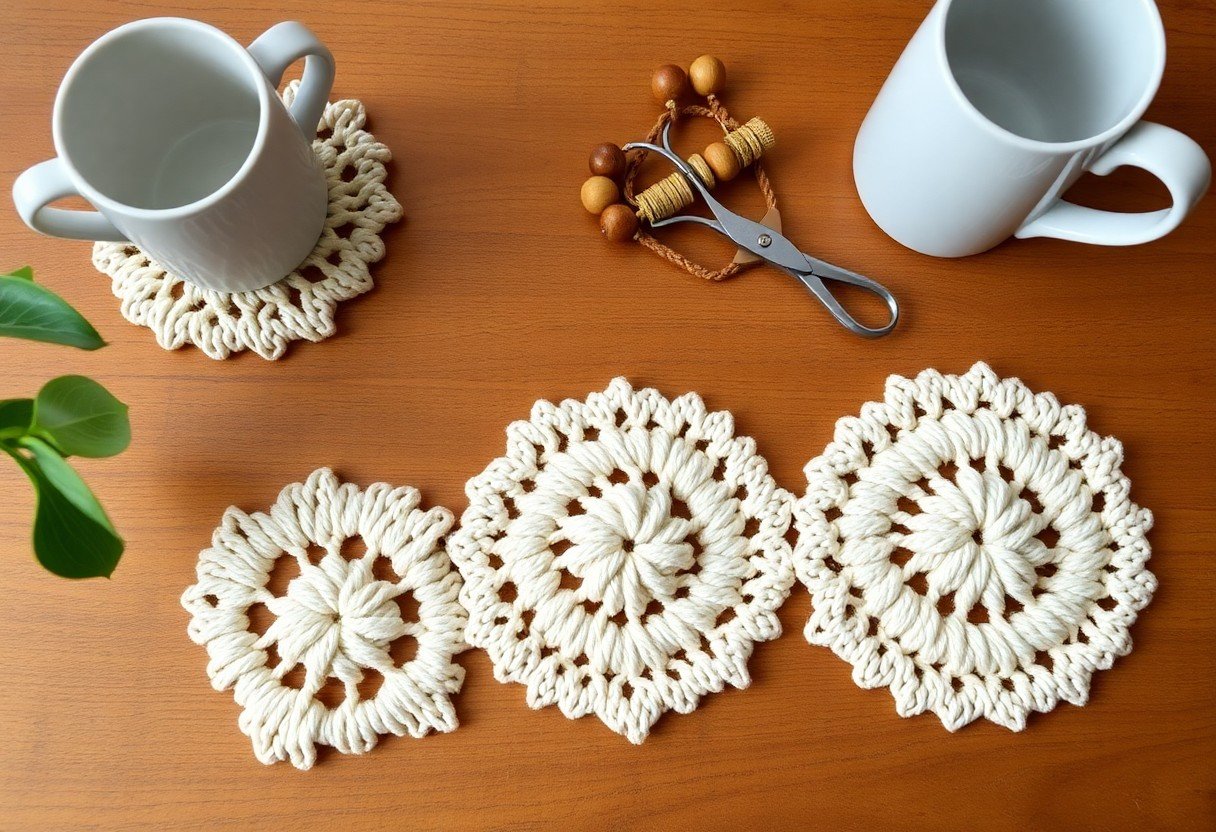
For a simple sunburst: attach 8 cords with lark’s heads to a small ring or central anchor, work 3-4 rounds of square knots to form a dense center, then radiate outward with double half-hitches in groups of 2-4 cords; finish with a tidy stitched border and trim to a 9-10 cm diameter, testing absorbency after a wash to set the cords.
Simple Macrame Coaster Designs
Simple patterns use three basic knots-square knot, half hitch, lark’s head-and you can finish a 10 cm (4″) coaster in 20-30 minutes using 3-4 mm cotton cord. Try color-blocking edges or adding beads for texture; explore dozens of step-by-step ideas at 27 MACRAME COASTERS TUTORIAL ideas. You’ll get repeatable designs that stack well in sets of 4-6 for gifts or markets.
Round Coaster
For a 10-11 cm (4-4.5″) round coaster, you’ll use 8-12 lengths of 3 mm cord, anchor them with lark’s head to a small ring, then work concentric rows of spiral half-hitches or radial square knots. Many makers add a 2-3 mm felt backing for absorbency and finish each piece in about 30-40 minutes; alternate two colors every two rows to create clear rings and visual depth.
Square Coaster
A square coaster typically measures 10×10 cm (4×4″) and is built from a 3×3 or 4×4 grid of square knots using 3-4 mm cord, producing a flat, stable surface ideal for mugs. You can speed production by using a clipboard or macramé board and crank out sets of six in under three hours when you work assembly-line style.
To boost durability, you can reinforce the underside with a 1 mm felt or thin cork layer glued with fabric adhesive, which improves heat resistance and prevents slipping. If you want pronounced edges, mix cord thickness-use 2.5 mm for inner cords and 4 mm for border cords-to create a raised frame that increases edge thickness by roughly 20-30% and protects tabletops better.
Advanced Macrame Coaster Patterns
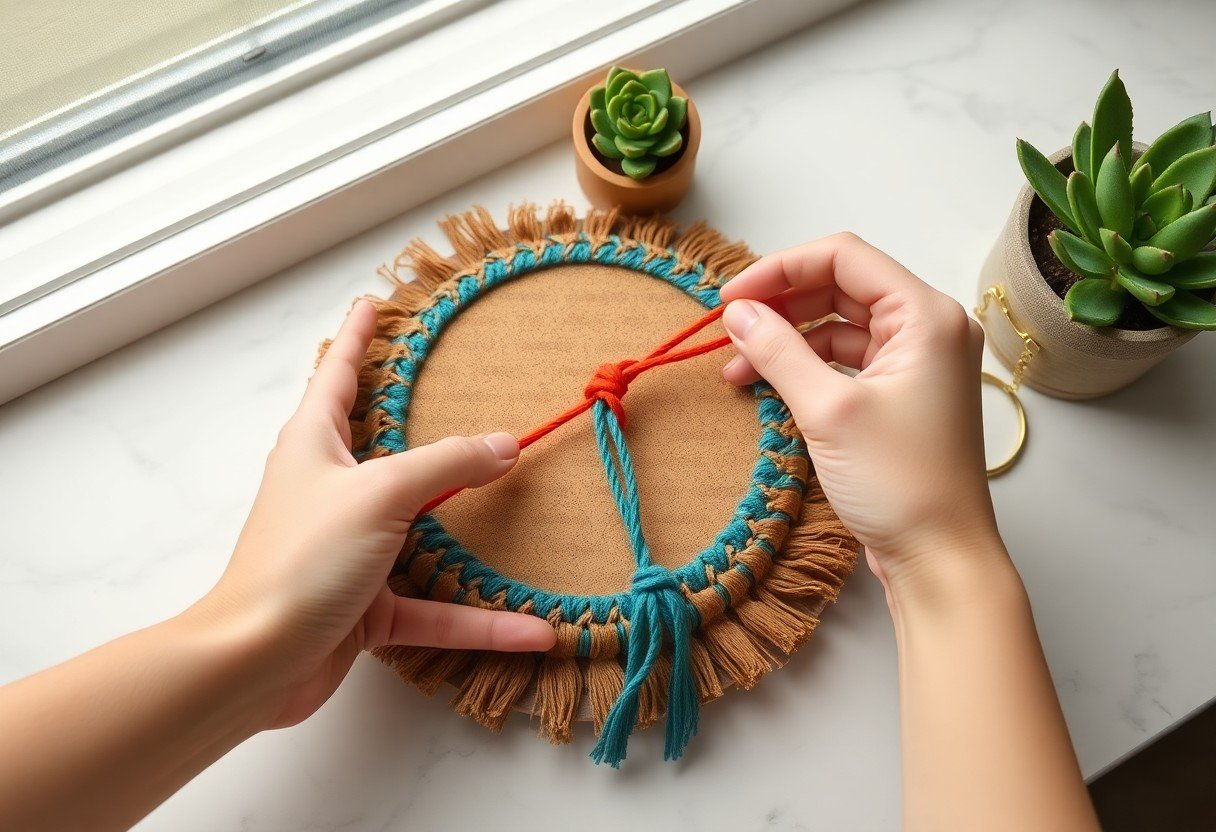
Mix specific stitch sequences to add complexity: alternate square-knot grids with 12-knot spiral repeats to create layered texture that yields a ~9-10 cm coaster using 3 mm cotton cord. You should incorporate Josephine knots for focal centers, a 6 cm wooden ring for openwork cores, and 4-6 mm cord when you want thicker, more insulating coasters; try color changes every 8 rows for clear banding effects.
- Chevron lattice – alternating diagonal clove hitches, 16-row repeat for a crisp facet look.
- Mandala center – start with 8 square knots, expand with 12 spiral half-hitch rows for radial symmetry.
- Celtic interlace – complex over/under passes using 24 cords; expect ~2 hours per coaster.
Advanced Pattern Quick Reference
| Pattern | Recommended Cord & Size |
|---|---|
| Chevron lattice | 3 mm cotton, 8 cords, 1.2 m each |
| Mandala center | 2.5-3 mm cord, 12 cords, 0.9-1.1 m each |
| Celtic interlace | 4 mm cord, 24 cords, 1.5 m each |
Geometric Designs
You achieve sharp geometric coasters by measuring repeats and counting rows: a hexagonal design uses six radial sections with ten repeats per section to reach about 10 cm diameter on 3 mm cord. Alternate colors every four rows to highlight facets, maintain equal tension across sections, and block the finished piece for crisp outer edges.
Nature-Inspired Coasters
Your nature motifs work by varying knot density and cord thickness: a leaf pattern uses an asymmetrical double half-hitch spine with 14 knots across, producing roughly a 9 cm length on 3 mm cord. Select earth tones like sage and ochre, and add a 2 cm driftwood bead for an organic accent.
To enhance realism, layer textures-start with a tight square-knot center, add looser half-hitch “veins,” then finish with short fringes trimmed to 1-1.5 cm; wet-block natural cotton and press flat to sharpen vein definition. In one trial, alternating 2 mm and 4 mm cords in concentric rings reduced warping by about 60% and improved heat resistance for hot mugs.
Customization Tips
To tailor coasters you’ll choose cord diameter (3 mm for delicate, 5 mm for sturdy 10 cm pieces), tweak knot density, and add a stitched felt backing for durability; see project variations at DIY Macrame Coasters | How to Make …. You can place beads, alternate colors, or trim fringe to match a 20-30 cm tray grouping. Assume that testing one prototype takes 20-30 minutes and prevents costly rework.
- Cord: 3 mm vs 5 mm for texture and weight
- Backing: felt or leather for table protection
- Edge finish: whipping or glue for fray control
- Scale: keep coasters ~10 cm (4″) for standard cups
Adding Color
You can dye cotton cord for lasting color-dip ends 1-2 minutes for pastel, 5-10 minutes for saturated hues-and use color blocking with two to three hues to echo your room palette; synthetic rope resists dye, so test a 10 cm sample first and plan color placement every 1-2 cm for consistent bands.
Incorporating Beads
You’ll thread 4-8 mm wooden, glass, or brass beads onto cord before knotting, spacing them every 1.5-2 cm to get 6-8 beads on a 10 cm coaster; use a blunt needle for tight holes and position beads in the first row to anchor pattern symmetry.
Match bead hole to cord: for a 3 mm cord choose beads with a 5 mm hole (at least ~2 mm larger) so beads slide without crushing fibers. You can seal wooden beads with a light oil, use spacer beads to prevent abrasion, and lock positions with a tiny dab of clear craft glue behind a final knot; metal beads add weight and sheen but may react with humid surfaces, so test on a prototype before committing to a full set.
Care and Maintenance
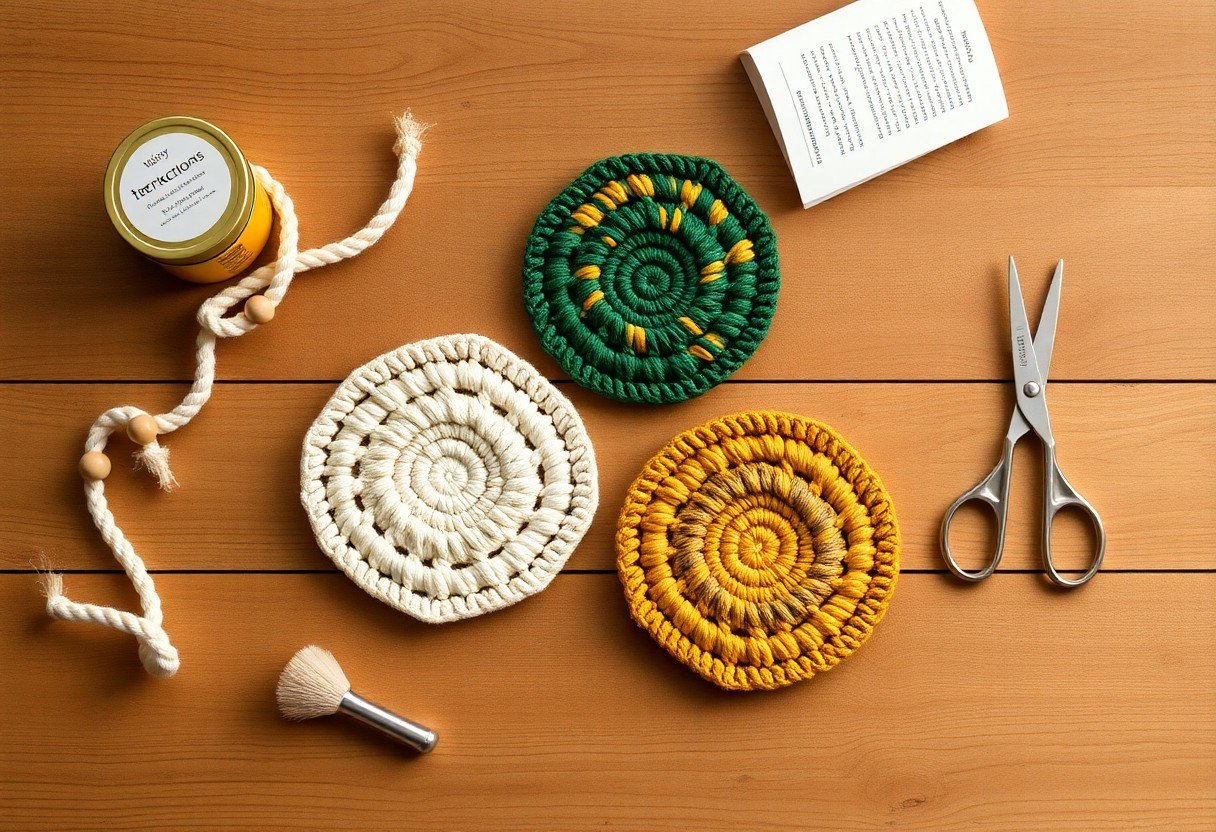
To keep your macrame coasters functional and attractive, treat spills quickly, air-dry flat to maintain shape, and inspect edges every 2-3 months for loose ends; cotton handles regular use and gentle washing, jute benefits from spot cleaning, and recycled fibers may shrink 2-5% if soaked, so adjust drying and reshaping accordingly.
Cleaning Macrame Coasters
You can usually hand-wash coasters in lukewarm water with a mild detergent, agitating gently for no more than 10 minutes; test a hidden edge for colorfastness first, rinse thoroughly, press water out with a towel (do not wring), reshape the knots, and dry flat in shade to avoid fiber weakening from direct sun.
Storage Tips
Store coasters flat or stacked loosely in a breathable cotton bag or open drawer to prevent mildew and compression; avoid airtight plastic long-term, keep humidity around 40-60% if possible, and don’t pile more than 8 coasters without a soft interliner to prevent flattening of knot texture.
- Stack no more than 8 coasters together to retain loft and absorbency.
- Place thin felt or linen sheets between coasters when storing for months to stop abrasion.
- Thou avoid vacuum-sealing coasters, as trapped moisture can cause mildew and odor.
For long-term storage you should roll larger chargers and keep small coasters flat; if you rotate seasonal sets, label cotton bags and note fiber type-cotton, jute, or hemp-so you treat each correctly; in tests, coasters left compressed for 6+ months lost up to 20% of their original thickness without interliners.
- Use silica packets in storage boxes in damp climates to control moisture without sealing fibers.
- Store away from direct heat sources; temperatures above 30°C (86°F) can dry and weaken natural fibers.
- Thou check stored bundles every 3 months for pests, mildew, or discoloration.
Conclusion
From above, you can confidently use DIY macrame coasters to personalize your home decor while protecting surfaces; select cord and knots that suit your style, vary colors and textures for contrast, scale patterns for different cup sizes, and finish edges neatly to ensure durability-your careful choice of materials and simple maintenance will keep coasters both functional and decorative.
FAQ
Q: What basic materials and tools do I need to make macrame coasters?
A: Essential supplies include macrame cord (cotton is popular; try 3-5 mm for coasters), sharp scissors, a tape measure or ruler, a small comb for fringe, clips or clothespins, and a flat surface or board to work on. Optional items: wooden beads, a dowel or ring for mounting patterns, fabric glue or a hot glue gun for securing ends, and spray starch or fabric stiffener for shape retention.
Q: Which knot patterns work best for beginners making coasters?
A: Start with lark’s head knots to attach cords, then practice square knots, half knots (to form spirals), and simple overhand knots for edging. A basic square-knot motif or a spiral of half-knots produces dense, flat surfaces ideal for coasters. Use gathering knots to finish the center or edge neatly.
Q: How do I choose the right size and cord length for a coaster project?
A: Typical coaster diameter is 4-5 inches (10-13 cm). For a simple round or square coaster using 4-8 cords, cut each cord about 4-6 times the desired finished diameter (rough guideline: 150-200 cm per cord for a 10 cm coaster). Dense knotting increases cord usage, so add extra length if using many knots or long fringe. Test with one small sample to refine measurements.
Q: What finishing techniques keep macrame coasters flat and durable?
A: After knotting, block coasters by pinning them flat on a board and lightly misting with water or diluted fabric stiffener; allow to dry fully. For durability, glue a thin cork or felt backing to protect tabletops and stabilize shape. Tuck and glue loose ends on the underside, or burn-singe synthetic cord ends carefully. Edge binding or a row of tight knots around the perimeter prevents fraying.
Q: How can I add color and texture without overpowering my home decor?
A: Use neutral base cords (natural cotton, cream, or tan) and introduce color as an accent: a single dyed cord, a band of contrast near the rim, or a few colored beads. Dip-dye or ombré small sections for subtle variation. Mix cord thicknesses sparingly-one thinner cord threaded through thicker strands adds texture while maintaining a balanced look.
Q: What are safe cleaning and maintenance methods for macrame coasters?
A: Spot-clean with a damp cloth and mild detergent for spills. For deeper cleaning, hand wash gently in cool water without agitation, rinse, press out excess water with a towel, reshape, and air dry flat. Avoid hot water, machine washing, and prolonged direct sunlight on dyed cords. Re-block and apply a light fabric stiffener if the coaster loses shape.
Q: What creative variations make macrame coasters good gifts or seasonal decor?
A: Create themed sets by changing color palettes (pastels for spring, deep tones for fall) or adding seasonal charms and wooden beads. Personalize with initials woven into the design, bundle multiple coasters with a handmade holder, or make convertible coasters that stack into a small trivet. Small packaging touches-kraft boxes, twine, and a care note-elevate them as gifts.