

Macrame makes a swing chair feel personal and cozy, and you’ll want it to look great and hold up when you actually sit in it, not collapse – so this guide walks you through materials, knots, load testing and hanging tips in plain English. Want a comfy seat that won’t fall apart on you? You’ve got this, I’ll show the easy steps, some shortcuts, and what to avoid.
Safety first.
Key Takeaways:
- Lately macrame swing chairs have blown up on social feeds – tiny-house and boho decor trends put them back in the spotlight. Folks are hanging them on patios, in nurseries, even in apartments, so it’s a DIY people actually want. Feeling tempted to make one yourself?Use thick, outdoor-rated cord (10-12mm is a sweet spot) and stainless-steel hardware so the whole thing doesn’t go south after a season. Match the rope and fittings to the expected load and environment – indoor cotton wears faster outside, and salt air needs corrosion-resistant metal.Test anchors with a static load well above your body weight before anyone sits.
- Knot work and construction matter more than fancy patterns when safety’s on the line. Tight, even knots distribute weight; sloppy or uneven rows make the seat sag or shift and that’s when stress points form. Practice your square knots and gather loops until they look and feel solid.Reinforce high-stress spots – double or triple knots where ropes meet hardware, and use full-strength carabiners or eye bolts rated for human loads. If you’re not sure about a connection, swap it for a higher-rated part.Always back your hanging point with a proper beam, joist, or engineered anchor.
- Installation’s the boring bit but it’s where most failures happen, so don’t cut corners. Hooking into a ceiling without finding a joist is a no-go, and a freestanding frame needs proper bracing – shaky equals unsafe. Want peace of mind? Use a certified hanging kit or consult a pro for awkward spots.After hanging, load-test slowly: add weight in steps, listen for creaks, watch for movement, tighten as you go. Do a seasonal check – ropes fray, knots loosen, bolts corrode over time.If anything creaks, shifts, or looks worn – take it down and fix it before anyone sits.
What’s a Macrame Swing Chair All About?
Core Features
A well-made macrame swing chair will hold a grown adult and look amazing in your space. You typically use 10 mm (3/8″) cotton rope, about 50-70 ft for a single seat, plus hardware rated 400+ lb like a swivel and carabiner. Knotting the pattern takes 4-6 hours for a beginner; test load gradually before daily use. Want a cozier, longer-lasting seat? Add a canvas base or cushion.
Materials You’ll Need to Get Started
Essential Supplies
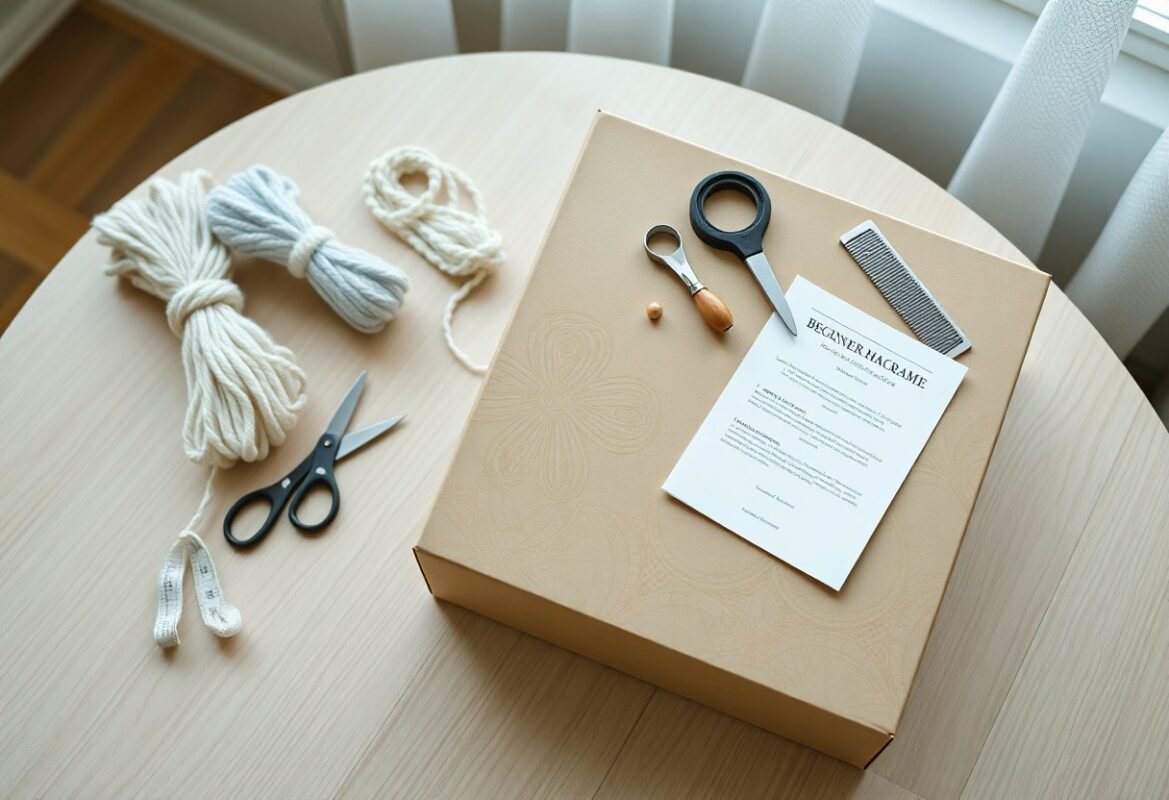
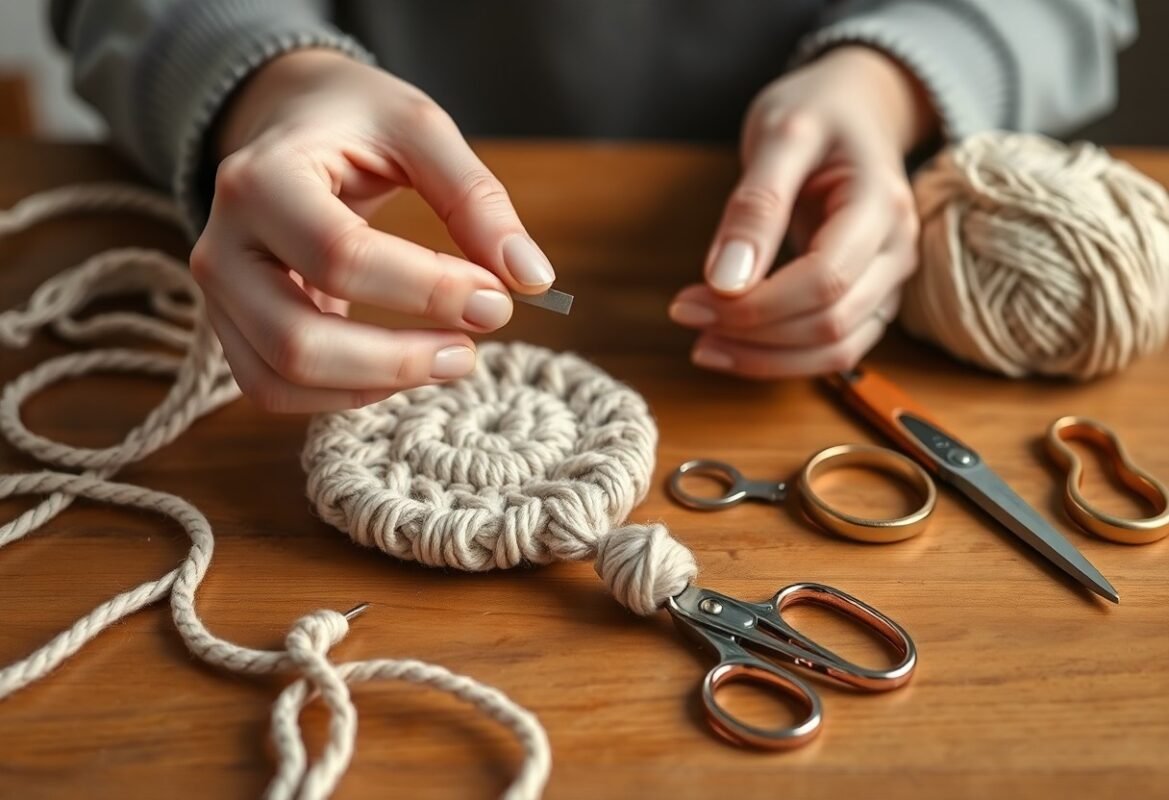
Oddly enough you don’t need specialist cord – 6 mm braided cotton macrame cord, about 150-200 ft (45-60 m), will do most chair patterns. And add a 36-48 in (90-120 cm) hardwood spreader or dowel, a strong 4 in (10 mm) steel O-ring, a heavy-duty swivel carabiner plus a 3/8 in ceiling eye bolt with nut and washer. Tools: tape measure, sharp scissors, lighter or whipping twine, measuring board and a comb for fringe.
Use hardware rated for at least 1,000 lbs.
Want a cushion? You can add one later.
Knots That Make Your Chair Stronger (Trust Me on This)
Key knots to use
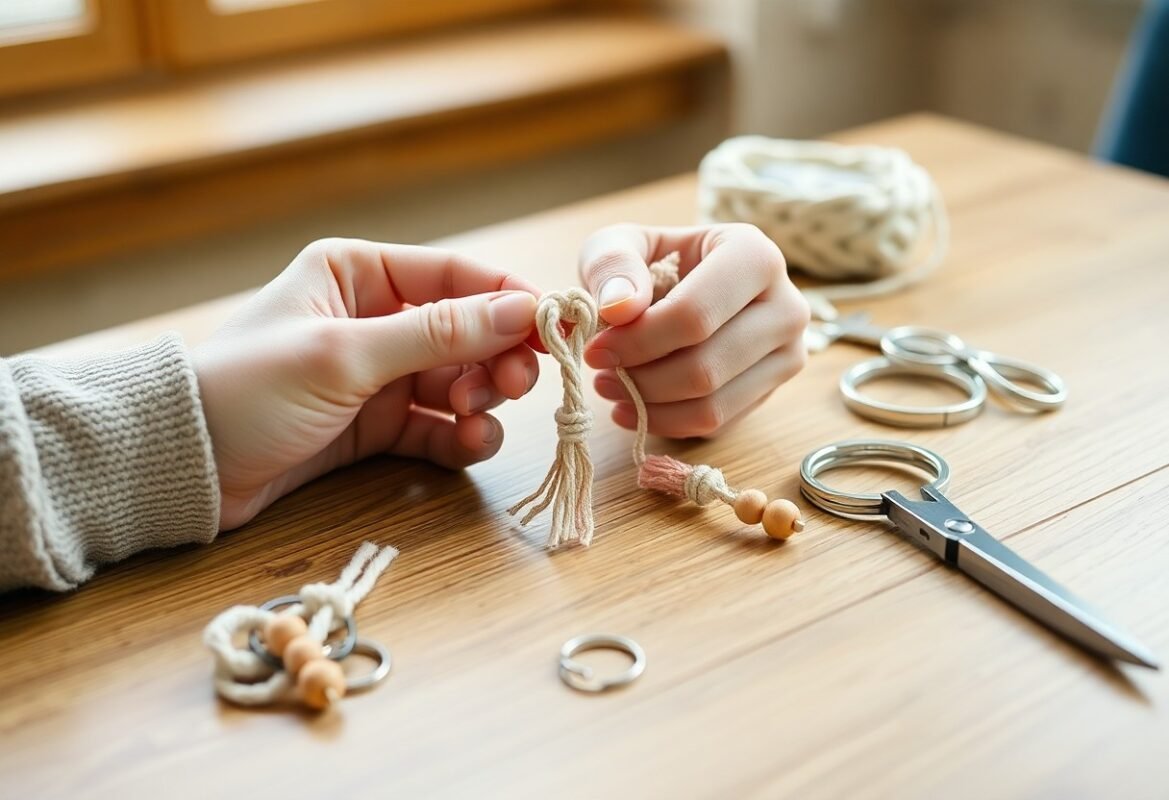
That unassuming square knot often grips better under strain than fancy wraps. You’ll use square knots for seat panels, double half hitch for tidy edging, lark’s head to attach cords to the spreader bar, and a gathered whipping or figure-eight at the suspension point. Aim for 12-16 main cords, use 6-8 mm cotton or 8-10 mm for heavier loads, and stagger knots every 10-12 cm so your weight spreads evenly. Want proof? Test to a 150 kg static load before regular use.
How I Made My Macrame Swing Chair: A Step-by-Step Guide
Build snapshot
Process120 ft of 6mm cotton cord is what you’ll need for a standard adult swing, split into twenty-four 5-ft cords with ~10% extra. You cut and measured, attached cords to a 30-inch oak seat, then tied rows of square knots and alternating half-hitches – took about 8 hours over two evenings, but you’ll get faster. Want to see how the knots held up? |
Quick Specs120 ft 6mm cotton; 30-inch oak seat; 24 working cords; 2 locking carabiners; 10mm eye bolt; final load test 250 lb. |
Safety First: Tips for a Secure Swing Chair Experience
Anchors & hardware
Your swing should outlast the house.
Use 3/8″ marine polyester rope rated 1,200+ lb and knot with a figure-8 or double fisherman; mount to a 2×10 or beam with two 5/16″x4″ lag eye bolts, spaced ~12″ and pre-drilled with a 3/16″ bit. You test with a 300 lb sandbag first. Want longevity? Inspect knots monthly, and treat outdoor rope with UV protectant.
- 3/8″ rope, 1,200+ lb
- 2×10 beam, 5/16″x4″ lag bolts
- 300 lb test load
Thou replace rope at first fray or after 2 years of daily exposure.
How to Hang Your Swing Chair Like a Pro
Anchors, hardware and testing
A single properly installed lag screw or eye bolt into a solid joist often supports 600-1,000 lbs. So you mount your swing to a structural member, use rated hardware like 3/8″ grade 8 eye bolts and 3/8″ locking carabiners rated ~5,000 lb, pre-drill pilot holes, add washers and lock nuts, and tighten to spec. Want to hang from a beam or use a beam clamp? Test by sitting and gently rocking, then load with a 200-300 lb sandbag and inspect for any movement or cracks.
Conclusion
On the whole, like turning a jumble of rope into a relaxing nest, building your macrame swing chair is something you can do safely if you follow sensible steps. You pick the right cord, check load limits and anchors, use solid knots and proper hardware, and test it thoroughly – don’t skimp or hurry. Want a cozy seat that you made? So take it slow, ask a friend to help with the heavy bits, and you’ll have a comfy, durable swing you can actually trust.
FAQ
Q: What materials and rope size should I use to make a safe macrame swing chair?
A: Lately everyone’s posting boho patios and DIY porch makeovers with macrame swings all over Instagram and TikTok, so it’s a great time to jump in – but pick the right stuff or it won’t last long. For a comfy adult swing pick a strong cord – 10 mm to 12 mm (about 3/8″ to 1/2″) braided rope is a sweet spot: thick enough to hold weight and still flexible for knots. Polyester or polypropylene are weather-friendly; cotton feels amazing against skin but will rot outdoors unless you treat it or keep it inside.
Use hardware rated well above the weight you expect to carry – aim for a safety factor of at least 4 or 5. That means if two people might sit (say 300 lb total), your rope and hardware should have breaking strength in the 1200-1500 lb range or higher. Get stainless steel eye bolts, heavy-duty carabiners and an O-ring or swivel rated for that load – cheap hardware is a false economy.
Don’t skimp on the anchoring method – joists, beams or thick branches only. If you anchor into a ceiling, screw into a structural joist with a long lag eye bolt or use a properly installed beam hanger. If you’re unsure about the beam or branch strength, get it checked or use a beam clamp made for swings.
Q: How many cords, how long should they be, and what knots do I need for the chair?
A: There’s no single “correct” pattern, but here’s a practical setup for a roomy single-seat swing: plan for a finished seat width of 24-30 inches, and use 24-32 working cords. For cord length, macrame eats rope – use about 4 to 6 times the finished length per cord depending on how many square knots and gathers you’ll do. So for a 40″ finished drop, cut cords around 13-20 feet long (4-6 m) each. Do the math before you buy – it adds up fast.
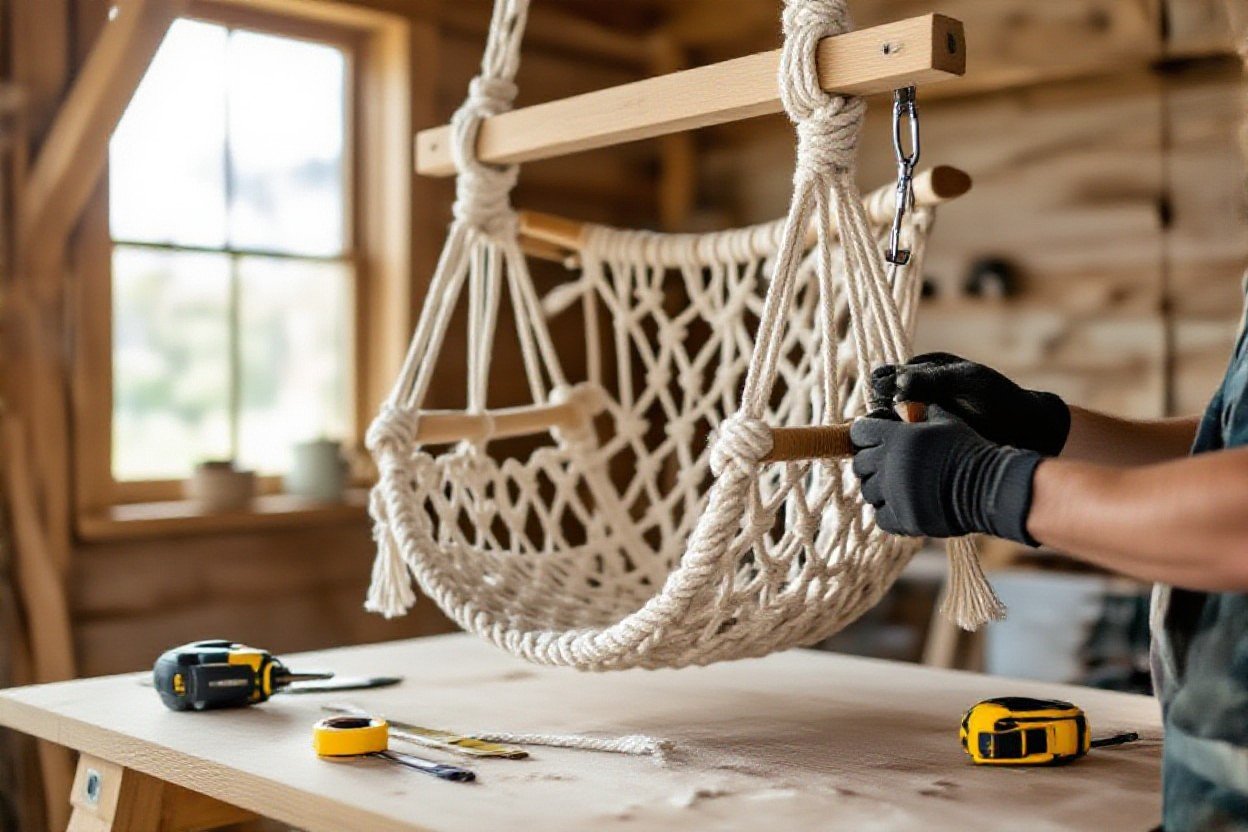
Start by folding each cord and attaching it to a spreader bar or wooden dowel with lark’s head knots. Build the seat with square knots and alternating patterns for a dense support area; use double half hitch or clove hitch along the edges to keep the shape tidy. At the top gather the cords into a strong wrap knot or whipping and attach them to your hanging ring with multiple strands through an O-ring – double up those connections if you’re unsure. Want reinforcement? Braid three or four core cords through the seat center – it gives big extra strength without changing the look.
Practice the knots on scrap rope first; test a small sample to see how much rope your pattern consumes. It’s annoying to run out five rows from the end – been there, done that.
Q: How should I hang, test, and maintain the swing so it stays safe over time?
A: Choose your hanging point carefully: a solid ceiling joist, a heavy beam or a branch at least 8″ in diameter. Use rated hardware – a long lag eye bolt screwed into the center of a joist with a washer, or a commercial swing hanger/beam clamp is best. Don’t use drywall anchors or short screws into thin wood. If hanging from a tree use a tree strap or wrap with a protective sleeve to prevent bark damage and rope wear.
Test the setup before anyone sits. Load-testing with sandbags or heavy objects is ideal – and yes, it feels silly but do it. Sit on it only after the setup has proven stable under load and after checking for slipping knots or wobble in the hardware.
Test the whole setup with twice the weight you expect it to carry before using it.
Inspect monthly if used often – check for frayed rope, loose knots, rust or deformation in metal parts, and any movement in the wood or branch you’re attached to. For outdoor swings, treat or swap cotton ropes seasonally, keep metal parts lubricated and stainless where possible, and store cushions or removable elements indoors during bad weather. Small fixes early prevent a big fail later.