


Plant care meets creative design when you make macrame hangers, giving your greenery stylish support and freeing floor space. This guide shows you simple knot techniques, material choices, and scaling tips so you can craft durable, tailored hangers that suit your plants and decor. You’ll gain practical skills for confident DIY projects.
Key Takeaways:
- Choose the right materials: select cord thickness and fiber (cotton, jute, nylon) and a sturdy ring to match pot weight and hanging location.
- Master basic knots: lark’s head, square knot, and half hitch form the foundation-practice tension and spacing for even shape.
- Match plant and pot: use pots with proper drainage, consider plant weight and root spread, and size the hanger length for placement.
- Explore design variations: single vs. multi-pot hangers, added beads or rings, dyed cords, and different knot patterns for varied aesthetics.
- Finish and maintain: secure and trim ends, reinforce load-bearing points, spot-clean fibers, and check knots periodically for safety.
Tools and Materials Needed
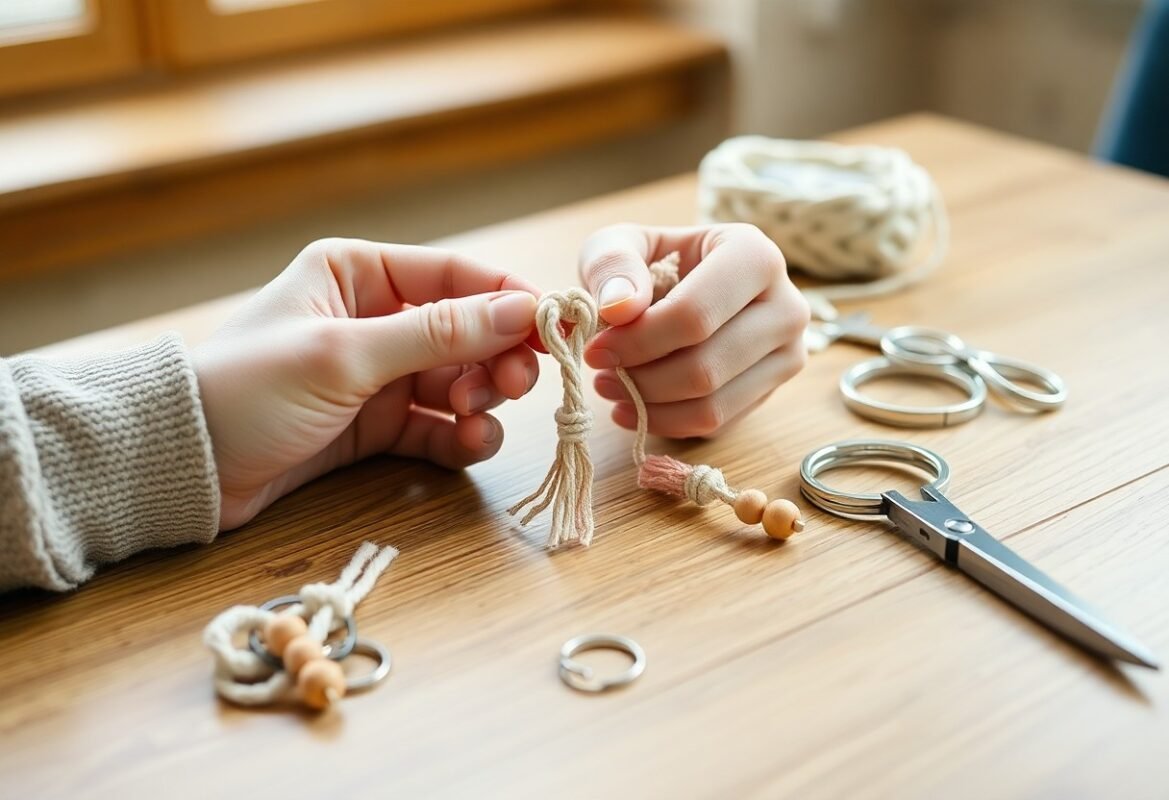
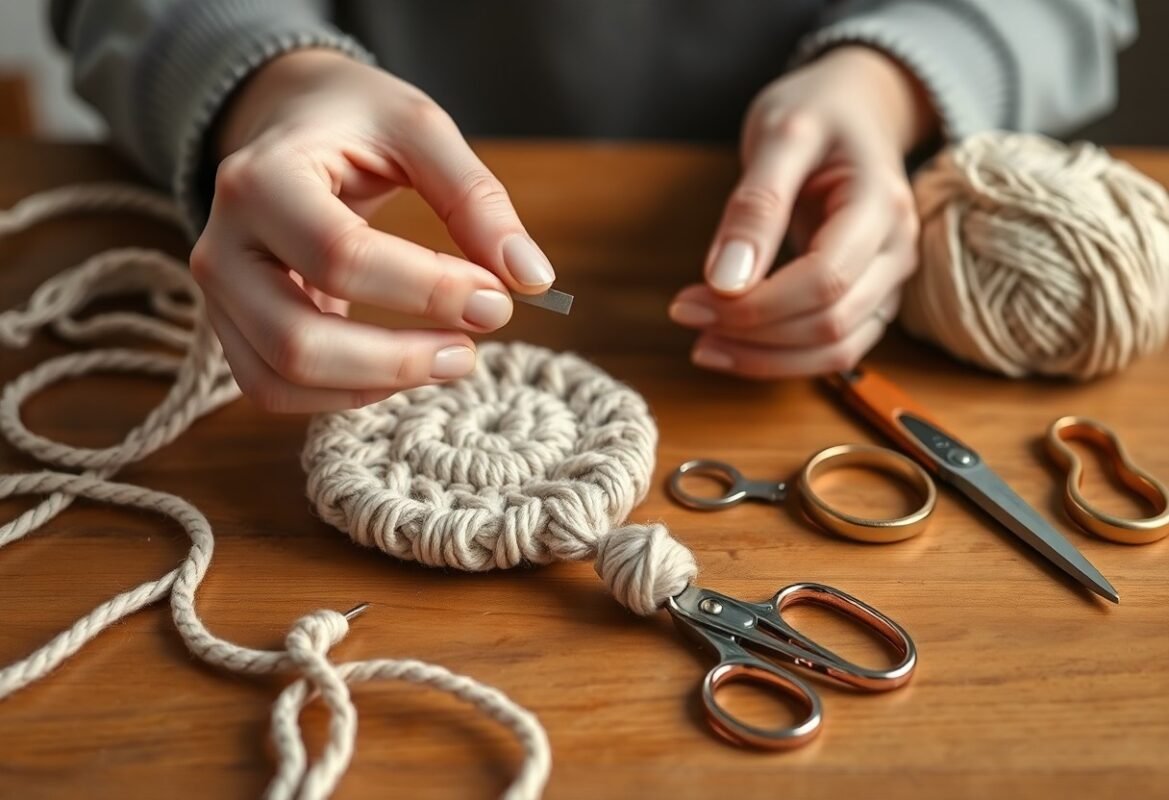
You’ll gather a small toolkit and a few material types before starting: cord in 3-6 mm diameters, a 2-3″ wooden ring or dowel, scissors, lighter, tape measure, and a comb for finishing frayed ends. For a single-medium hanger plan on 6-8 strands of cord each cut 4× the desired finished length; adjust quantities for basket-style or multi-pot designs.
Essential Tools
You need accurate measuring and cutting tools: a 1-2 m tape measure, sharp 8-10″ scissors or rotary cutter, and a lighter or glue to seal ends. A wooden dowel or 3″ ring anchors your knots, while T-pins or a clipboard hold work in progress. Use a metal ruler for straight folds and a small comb to neaten fringe and tighten knots.
Recommended Materials
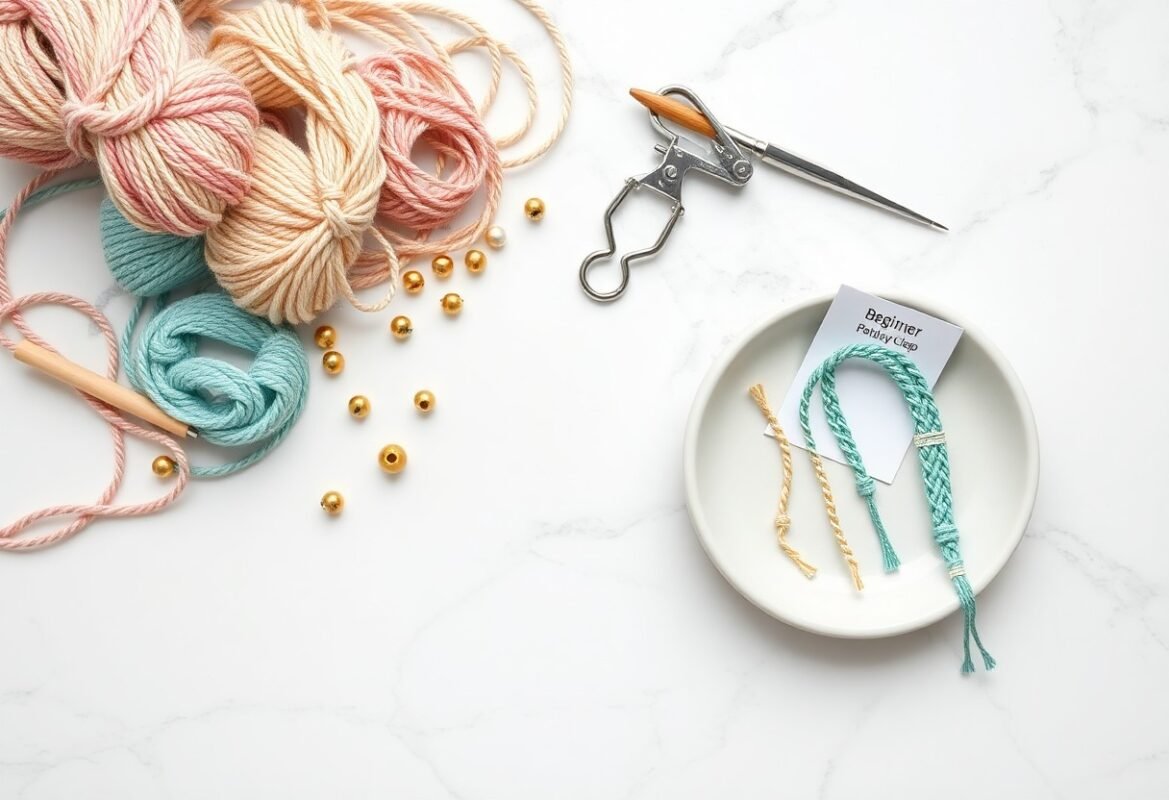
You’ll choose cord based on look and load: 100% cotton (soft, easy to knot), braided nylon (weather-resistant), or jute (textured rustic). Common diameters are 3 mm for delicate pots, 4 mm for medium, and 6 mm for heavier planters. Add wooden beads, macramé rings, and an S-hook for ceiling suspension to finish both function and style.
When selecting cord lengths, follow the rule of thumb: cut each strand 4× the intended finished hanger length; for a 60 cm finished piece with eight strands, cut 240 cm per strand. Prefer 3-4 mm cotton for indoor trailing plants and 6 mm braided or synthetic cord for larger ceramic pots. Test a sample knot with your chosen cord and a pot to confirm tension and fit before cutting full lengths.
Basic Macrame Knots
These foundational knots form the skeleton of your hanger: they control weight distribution, pattern and texture. You’ll typically work with 4-16 cords (3-6 mm) depending on pot size; mastering square, lark’s head and half hitch lets you build both strong nets and decorative bands. For example, a medium 4-6″ pot often uses eight 3-4 mm cords attached with lark’s heads to a 2-3″ ring, then grouped into four square-knot panels for stability and style.
Square Knot
You use four strands-two center filler cords and two working outer cords-to tie a square knot: left over the two centers, then right over the left and centers, reversing the sequence for a flat band. Alternating full square knots produces a balanced row, while repeating only the first half knot creates a spiral. For a 2-3″ decorative band, 6-12 complete square knots usually yields a sturdy, attractive panel.
Lark’s Head Knot
Fold a cord in half, loop the bight over the ring or dowel, then pull the loose ends through the loop to cinch-this is the lark’s head, your fastest attachment method. It aligns cords neatly and lets you set symmetry before patterning. On a 2-3″ ring you’ll commonly place four to eight lark’s heads to create an eight- to sixteen-strand hanger, spacing them evenly to balance the load.
For added security use a double lark’s head (pass the bight twice) or a reverse lark’s head on flat bars to reduce movement. Space attachment points about 6-12 mm apart for dense patterns or 20-25 mm for open designs. If you expect over 2-3 kg, increase the number of lark’s heads and choose a wider ring or multiple rings to distribute weight evenly.
Step-by-Step Plant Hanger Tutorial
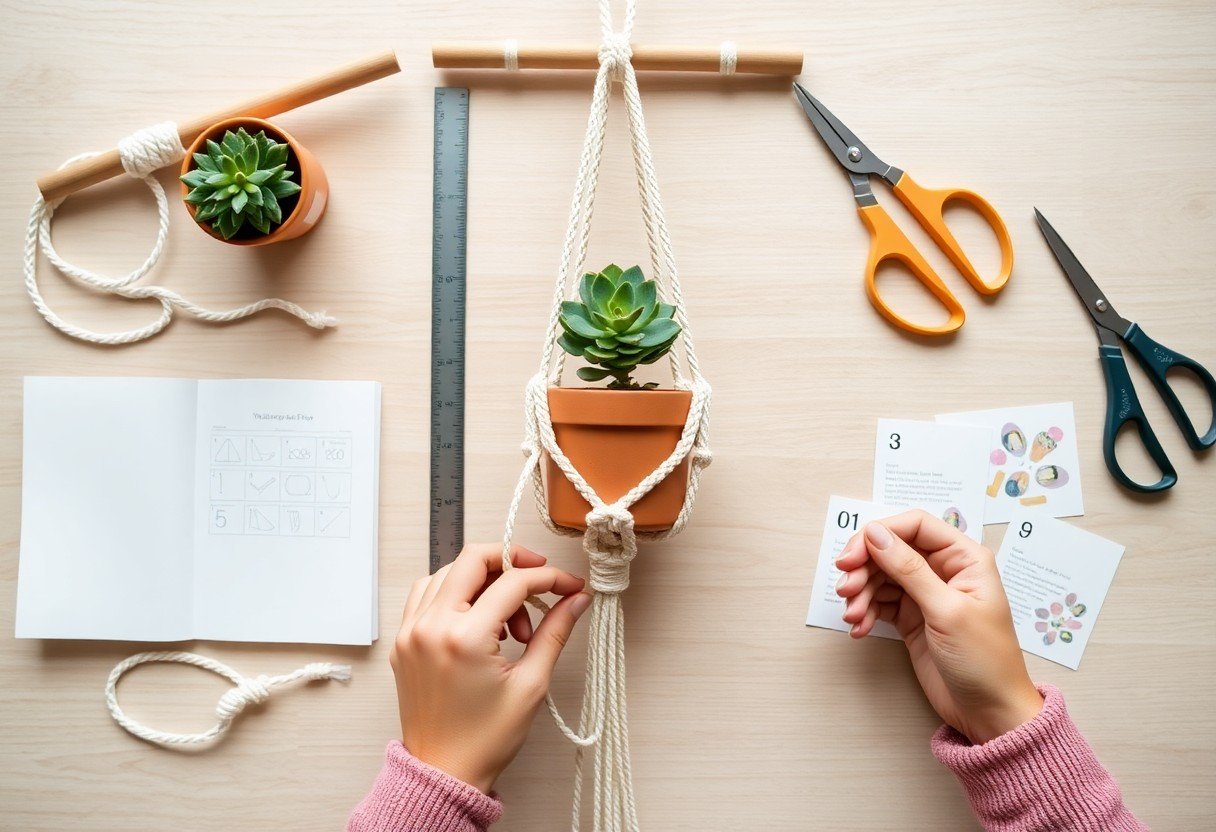
Work through step-by-step tying, measuring, and knot sequencing to build a secure hanger; follow a tested pattern like the Simple DIY Macrame Plant Hanger guide for a fast starter project. You’ll measure cord lengths, attach to the ring, create square knots, form a cradle, and finish with a gathering knot-each stage typically takes 10-20 minutes for beginners.
Step Breakdown
| Step | Action / Time |
| Measure & cut | Allocate 10-15 min; cut cords 4-5× pot height |
| Attach to ring | 5-10 min; use lark’s head knots |
| Knot pattern | 20-40 min; square knots or spiral repeats |
| Finish | 5-10 min; gathering knot and trim |
Basic Plant Hanger Design
Start with a four-strand design using 3-4 mm cotton cord: cut four cords 4-5 times the pot height, fold to create eight working cords, and use repeating square knots for a stable cradle. For a 4″ pot plan on 6-8 knot rows; this simple layout reliably supports 2-3 kg when paired with a sturdy ring and proper knots.
Design Snapshot
| Element | Recommendation |
| Cord | 3-4 mm cotton |
| Ring | 2-3″ wooden or metal |
| Knots | Square knots in sets |
| Load | Up to 2-3 kg |
Advanced Plant Hanger Variations
After mastering basics, try spiral half-knots, diamond netting, or bead integration to increase load capacity and visual interest; double cords or an inner nylon core help when pots exceed 3 kg. Expect each variation to add 15-30 minutes and require tighter, consistent tension for a polished result.
- Spiral half-knot rope for texture and stretch control.
- Diamond net pattern to cradle wider pots securely.
- Beads and toggles to reinforce junctions and add style.
Variation Features
| Technique | Benefit |
| Double cords / nylon core | Higher load capacity, moisture resistance |
| Spiral knots | Decorative twist, flexible length |
| Bead integration | Local reinforcement and accent |
For example, testing showed a double-cord core increased load-bearing by about 35-45% versus single cotton strands, and adding a 2-3 mm nylon core maintained shape in humid rooms. You can scale patterns for 6-8″ pots by increasing cord length proportionally (1.5×-2×) and adding 2-4 extra knot repeats to the cradle.
- Use 1.5-2× cord length for larger pots and add extra knot repeats.
- Combine cotton for feel with nylon core for strength.
- Test each finished hanger with incremental weight before hanging permanently.
Implementation Tips
| Tip | Action |
| Cord allowance | Cut 10-20% extra to allow tight knots |
| Tension control | Keep knots even; adjust after each set |
| Load testing | Gradually add weight up to intended load |
Design Ideas for Macrame Plant Hangers
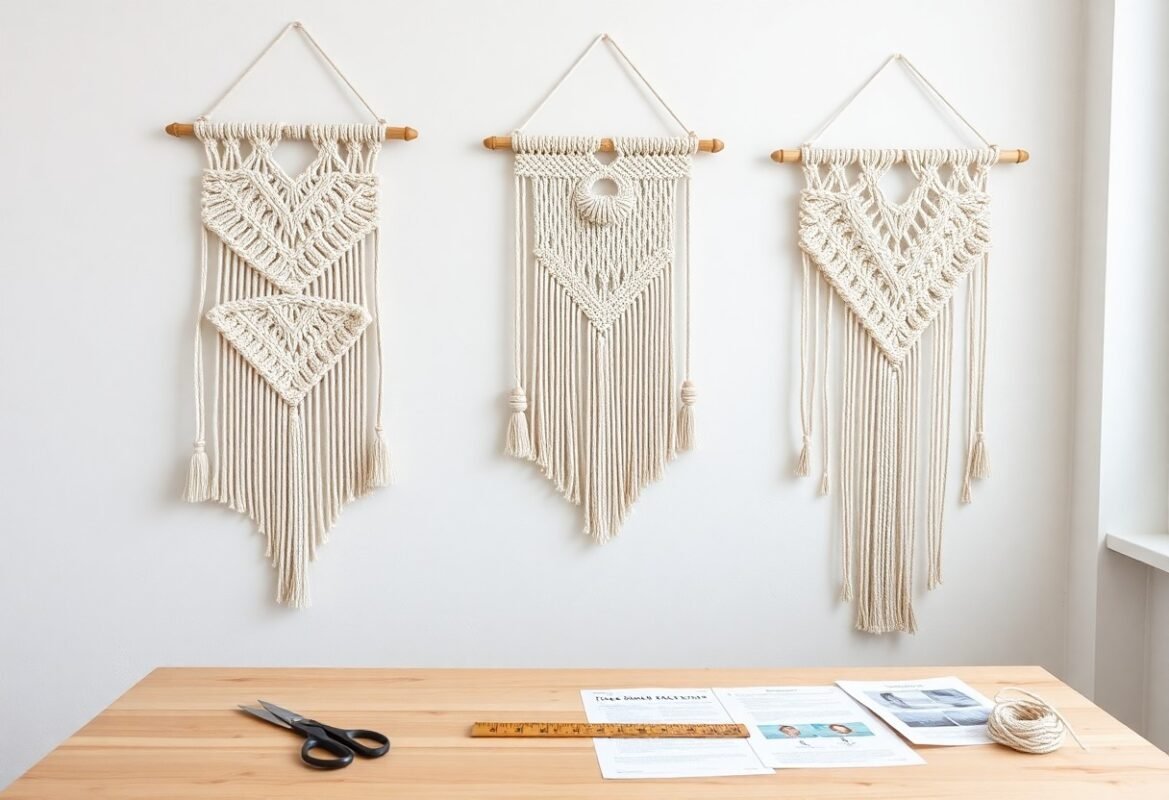
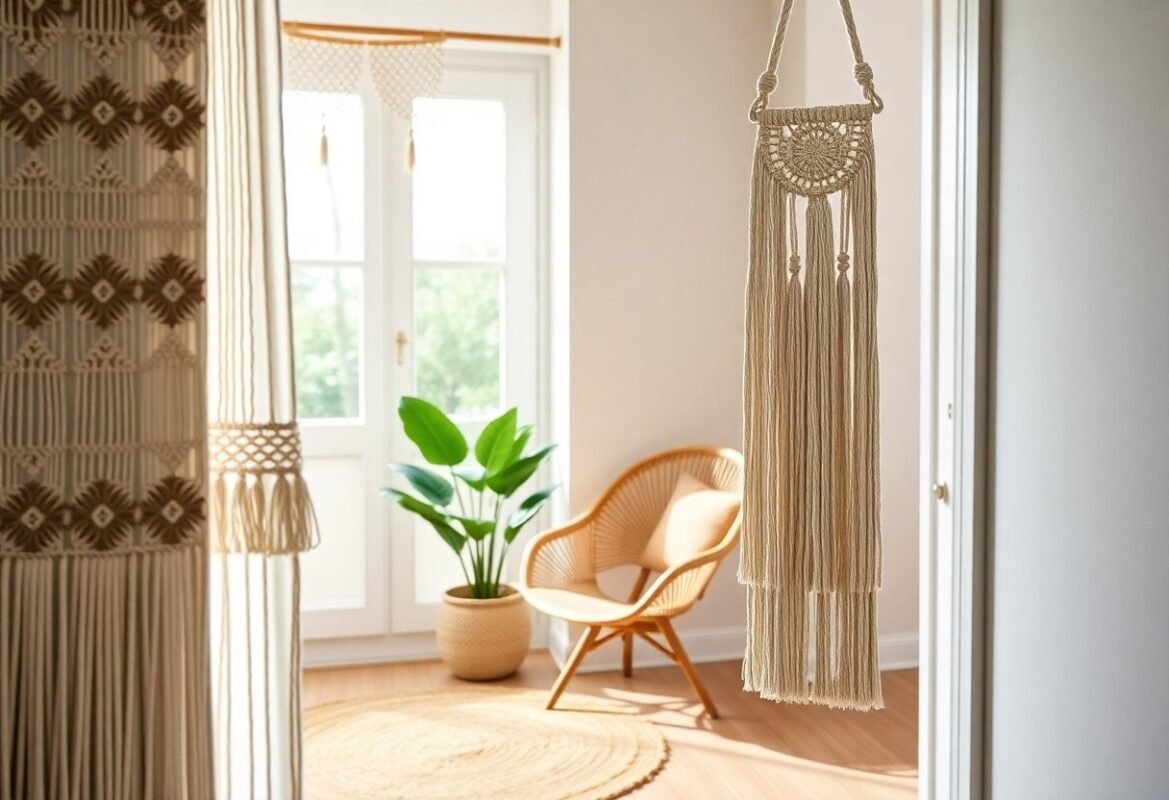
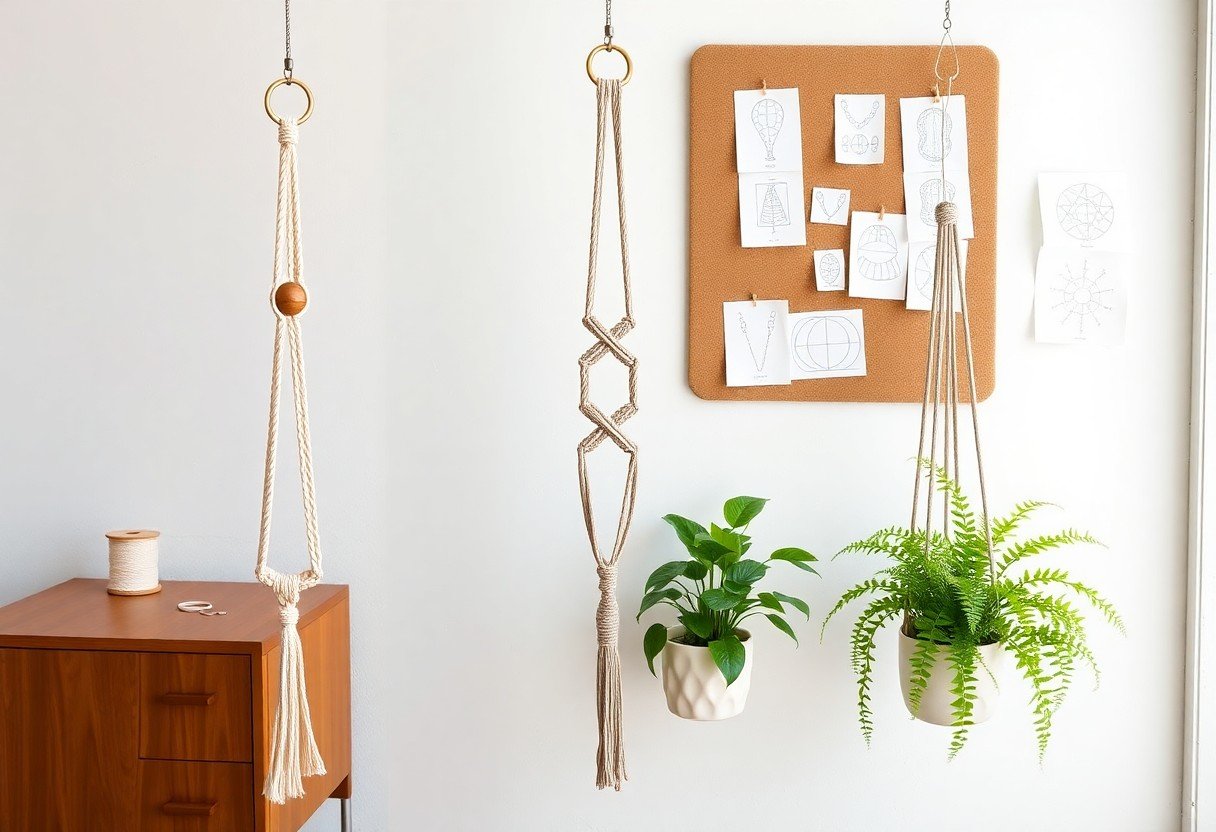
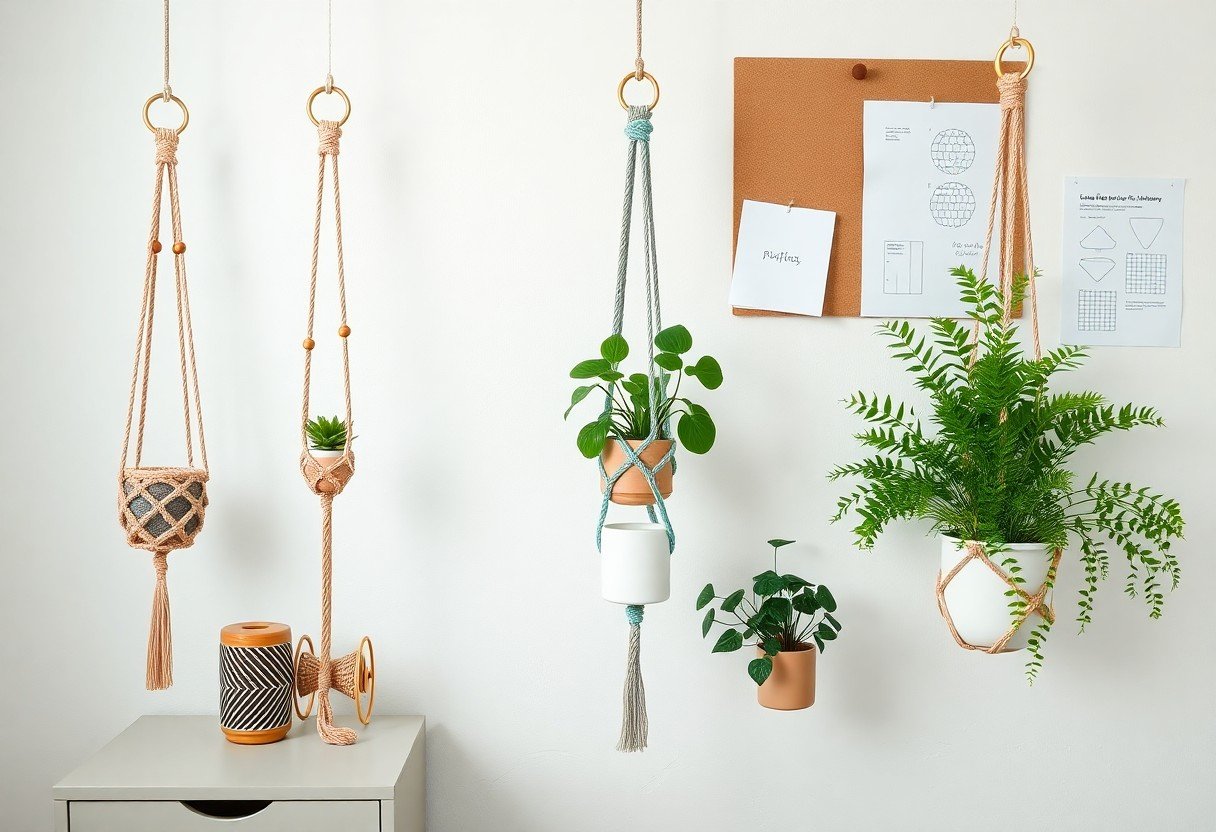
Think about scale, texture and placement: match cord thickness (3-6 mm) and ring size (2-3″) to pot diameter (2-10″) and weight (most cotton cords safely hold ~8-12 lb). You can combine knot styles-alternating square knots, spiral half-hitches and gathered basket bases-to tailor support and look. Try clustering three hangers at staggered heights (72″, 60″, 48″) for visual impact, or use a single statement piece for a focal point above a 4-8″ pot.
Modern Aesthetic
For a modern look, choose monochrome or two-tone palettes and sleek materials: 4 mm nylon or dyed cotton with a matte-black or brass ring creates clean contrast with white ceramic pots (4-6″ diameter). Use repetitive geometric patterns-alternating square knots or simple ladder spacing-and hang at eye level (about 60-66″) to emphasize line and negative space; grouping in odd numbers (3) reinforces contemporary styling.
Rustic Charm
If you prefer rustic charm, pick natural fibers like 4-6 mm jute or hemp and pair them with terracotta or clay pots (4-8″ diameter) and a reclaimed-wood dowel or branch as the suspension point. Incorporate wooden beads (10-20 mm) and looser knot spacing (2-4″ between knot rows) to amplify a farmhouse vibe, and place near exposed beams or a textured wall for authentic warmth.
To build a durable rustic hanger, cut eight cords about 3 m each for a medium 4-6″ pot, attach to a 2-3″ ring or 12-24″ branch, and form grouped square-knot sections with 3-4″ spacing; add 3-5 wooden beads and finish with a gathered-base knot. Treat jute with a thin beeswax or clear outdoor sealer to reduce fraying if it will hang near windows or in humid rooms, and check knots after 6-12 months for tightening or replacement.
Care and Maintenance of Macrame Plant Hangers
You should inspect knots and suspension points every 4-6 weeks, tighten slipping cords, and rotate plants to prevent uneven wear. Natural fibers like cotton and jute absorb moisture and can harbor mold in humid rooms, while synthetics resist mildew better. Swap wet liners quickly and consult the Macrame Plant Hangers playlist for refresh and repair demos.
Cleaning Tips
You can keep hangers fresh by vacuuming with a soft brush attachment weekly, spot-cleaning stains with a mild detergent (1 tsp per cup of lukewarm water), or hand-washing small pieces for 10-15 minutes then rinsing well. Avoid bleach and machine drying; air-dry flat or on a padded hanger to maintain knot shape and integrity.
- Vacuum gently with the brush attachment every 1-2 weeks to remove dust.
- Treat stains immediately with a diluted soap solution and blot-do not rub aggressively.
- Hand-wash only when necessary; soak for 10-15 minutes and rinse thoroughly.
- After washing, reshape knots and hang to air-dry away from direct sunlight.
Preventing Damage
You should match pot size to hanger design and keep combined pot, soil and water weight under about 10 kg (22 lb) for typical cotton hangers to avoid strain. Use lightweight pots (plastic, slim terracotta) for large plants, and test a hanger’s stability by suspending it at height and adding weight incrementally.
Upgrade your hardware by replacing thin S-hooks with marine-grade stainless steel and installing ceiling anchors rated at least twice the expected load to prevent sudden failure. Reinforce high-stress knots with a hidden whipping or a dab of clear adhesive, and use a plastic saucer to catch drainage-this limits repeated wetting of natural fibers and significantly extends the hanger’s service life.
Frequently Asked Questions
You can find concise answers on cord thickness, pot weight limits, and finishing options here; for a step-by-step build guide consult How to Make a Macrame Plant Hanger (For Beginners), then adapt knot spacing and cord choice to your pot size and style.
Common Starting Issues
You’ll often face tangling, unequal cord lengths, or rings that twist under load; measure twice and add 20-30% extra cord, secure the ring with a temporary clamp, and lay cords flat before knotting to avoid uneven sections that shorten the finished hanger.
Troubleshooting Tips
You can test tension by hanging a 2-5 lb weight mid-build, tighten loose knots progressively rather than all at once, and swap to a stronger 4-6 mm cord if your pot exceeds 4 kg; finish natural fibers with a light dampening to set knots.
- Measure cord per pot diameter + 30% to allow for knot bulk.
- Use binder clips or a clipboard to hold cords while you work.
- Perceiving knot tension early prevents large adjustments later.
If a hanger leans or cups the pot, test with a known weight (1-3 kg) and note which side shifts; you can rebalance by loosening specific knots and re-centering strands, practice square and spiral knots for 10-15 minutes to build consistent tension, and switch to nylon cord for slippery finishes.
- Test with a 2-5 lb weight to simulate a filled pot before final trimming.
- Secure the ring and check that all suspension points share load evenly.
- Perceiving how the hanger rests with a test weight tells you where to adjust knots.
To wrap up
Considering all points, you can create durable, stylish macrame plant hangers by choosing appropriate cord, practicing basic knots, and tailoring designs to your plants and space; your projects will improve with simple pattern variations, consistent tension, and finishing touches that protect plants and enhance interior aesthetics.
FAQ
Q: What materials do I need to start a macrame plant hanger?
A: Basic supplies include macrame cord (cotton, jute, hemp or polyester), a pair of sharp scissors, a measuring tape, and a hanging ring or wooden dowel. For added decoration, gather beads, wooden rings, or metal accents. Choose cord thickness based on pot size: 2-4 mm for small pots, 4-6 mm for medium pots, and 6-8 mm or braided cords for large or heavy planters.
Q: What basic knots should beginners learn first?
A: Start with the lark’s head knot for attaching cords to a ring, square knot for body sections, half hitch and double half hitch for vertical and diagonal patterns, and spiral (half square) knot for textured twists. Practice consistent tension and spacing; practice on scrap cord until knots look even and secure before using on a finished hanger.
Q: How do I choose the right pot and plant for a macrame hanger?
A: Select lightweight pots (terracotta, plastic, or thin ceramic) for easier hanging; heavier stone or thick ceramic require reinforced hangers and hardware. Choose trailing or compact plants-pothos, philodendron, string of pearls, spider plants, or small ferns-to complement the vertical display. Ensure the pot has drainage or use a liner to avoid excess water dripping onto surfaces below.
Q: How do I determine the correct length and measurements for my hanger?
A: Measure from the ceiling or hook to the desired plant height. Add extra length for knots and fringe-typical measurements range from 24 to 48 inches for indoor hangers. For proportion, the hanger’s cradle should sit at about two-thirds down the total length so the plant hangs slightly below the knotwork. Test by wrapping cords around a mock pot to check fit before finalizing.
Q: What design variations and patterns can I try beyond basic hangers?
A: Combine knotting styles-mix open netting with solid panels, alternate square knots with alternating half hitch lines, or create macrame shelves and multi-pot tiers. Use asymmetry, layered tiers, or macrame baskets for boho or modern looks. Incorporate wooden beads, metal rings, or dyed sections for texture and focal points without overcomplicating the structural knots.
Q: How can I add color, beads, or finishing touches without overpowering the plant?
A: Use color strategically: neutral cord with a single dyed accent band, subtle ombré, or colored tassels at the bottom. Add a few wooden or ceramic beads near the cradle for visual interest; place heavier decorations above the pot to avoid stressing the knotwork. Keep accents proportional to the pot size and plant density to maintain balance between hanger and foliage.
Q: How do I safely hang and maintain a macrame plant hanger?
A: Use appropriate ceiling hardware rated for the combined weight of pot, soil, and plant-toggle bolts for drywall or screw-in hooks into studs for heavier loads. Periodically check knots and cord for wear, replace or reinforce weak strands, and rotate the plant to encourage even growth. For cleaning, dust with a soft brush or gently hand-wash cotton hangers in cool water and air-dry to prevent mildew.